
 |
 |
 |
 |
 |
 |
 |
 |
 |

 |
Student invents silicon chip alternative
Troy, N.Y. (UPI) May 14, 2008 A doctoral student has invented a transistor that has captured the attention of some of the largest U.S. and Japanese automobile companies. Even before Weixiao Huang earned his doctorate from Rensselaer Polytechnic Institute, his invention was seen as possibly replacing one of the most common pieces of technology in the world -- the silicon transistor for high-power and high-temperature electronics. Rensselaer officials said Huang has invented a transistor that uses a compound material known as gallium nitride that could reduce power consumption and improve efficiency of electronics systems in everything from motor drives and hybrid vehicles to house appliances and defense equipment. "Silicon has been the workhorse in the semiconductor industry for last two decades," Huang said. "But as power electronics get more sophisticated and require higher performing transistors, engineers have been seeking an alternative like gallium nitride-based transistors that can perform better than silicon and in extreme conditions." Huang received a bachelor's degree in electronics from Peking University in Beijing in 2001 and a master's degree in physics from Rensselaer in 2003. He will receive his doctorate from Rensselaer during a Saturday ceremony and plans to work as a device engineer in the semiconductor industry. Community Email This Article Comment On This Article Share This Article With Planet Earth
Related Links Computer Chip Architecture, Technology and Manufacture Nano Technology News From SpaceMart.com
 Melting Defects Could Lead To Smaller, More Powerful Microchips
 Princeton NJ (SPX) May 05, 2008
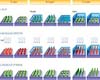
As microchips shrink, even tiny defects in the lines, dots and other shapes etched on them become major barriers to performance. Princeton engineers have now found a way to literally melt away such defects, using a process that could dramatically improve chip quality without increasing fabrication cost. |
|
|

| The content herein, unless otherwise known to be public domain, are Copyright 1995-2007 - SpaceDaily.AFP and UPI Wire Stories are copyright Agence France-Presse and United Press International. ESA Portal Reports are copyright European Space Agency. All NASA sourced material is public domain. Additional copyrights may apply in whole or part to other bona fide parties. Advertising does not imply endorsement,agreement or approval of any opinions, statements or information provided by SpaceDaily on any Web page published or hosted by SpaceDaily. Privacy Statement |

 del.icio.us
 Digg
Digg Reddit
 YahooMyWeb
 Google
 Facebook