|
 |
 |
 |
 |
 |
 |
 |
 |

 |
Student Winner To Fly Experiment In Space
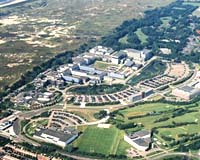
Paris, France (SPX) Mar 21, 2007 ESA's SUCCESS student contest drew to a close last week with an award ceremony at the European Astronaut Centre (EAC), in Cologne, Germany. With the first prize of a one-year ESA internship up for grabs, the authors of the proposals to reach the final round eagerly awaited the climax of the day - the announcement of the winners. To enter the SUCCESS contest European university students were challenged to think of original ideas for an experiment to fly on the International Space Station (ISS). Over 80 entries were received from all over Europe, with proposals covering a wide variety of fields, ranging from the classical life and physical sciences, to interior design and advanced robotics. A scientific jury selected three prize winners, with the first prize going to an investigation into cosmic radiation proposed by Norwegian student Haakon Lindekleiv. "It was a huge surprise. I hadn't expected that it would be kept secret until the last moment - I thought the winner would have been contacted before the actual award event!" Light flashes Unexpected visual sensations during space missions have been reported by many astronauts. These phenomena, known as 'light flashes', are probably caused by cosmic radiation. Lindekleiv proposes to passively register how light flashes affect the electric activity in the retina using a modified electroretinograph (ERG) on board the International Space Station. He proposes to use the ERG to find out if the light flash is caused by space radiation passing through the eye, or that the light flashes are triggered by radiation passing directly through the brain, thereby only creating the sensation of a light flash. The experiment is novel, simple, cheap, small, it consumes little time, and employs hardware that has routinely been used in hospitals. Opportunity of a lifetime Lindekleiv's prize is to spend one year working at ESA's research and technology centre, ESTEC, in Noordwijk, the Netherlands, where he will prepare his experiment for flight on the ISS. A student within the Faculty of Medicine at the University of Troms�, in Norway, Lindekleiv has not exactly decided on a professional career, although surgery is definitely one of his main interests. He now faces a dilemma as to how to plan the internship year within his current and tight educational planning, although ESA reassured him that this opportunity of a lifetime could be scheduled at his convenience. An ambitious student, he was immediately thinking practically. "We definitely need to get in touch with Fuglesang's group to benefit from their research and experience," said Lindekleiv, referring to ESA astronaut Christer Fuglesang, who flew to the ISS in December 2006, and who is also an expert on space radiation. Second and third prize The second prize was awarded to Daniel Brandt from the University of Leicester, in the United Kingdom, for his proposal for a passive low-cost nanometeoroid detector for the ISS. Brandt's monitor would detect the very smallest items of debris and help improve models for debris and nanometeoroid distribution at the altitudes of the International Space Station's orbit. The third prize went to Cornelia Meyer, who studied within the Institute of Mineralogy at Humboldt University, in Berlin, Germany. Cornelia proposed to place an artificial meteorite outside the ISS to verify Panspermia's 2nd phase theory - a theory that living organisms, which survived in ejected material from another planet, brought life to Earth. "We were pleased with the high quality of the received proposals and especially with the enthusiasm of Europe's young scientists and engineers" said Rogier Schonenborg, SUCCESS student contest project manager. A new SUCCESS student contest will start in mid-2007. SUCCESS SUCCESS stands for Space station Utilisation Contest Calls for European Student initiatives. This is the second SUCCESS contest organised by the ISS Education Office within ESA's Directorate of Human Spaceflight, Microgravity and Exploration. The winner of the previous SUCCESS contest, Adalberto Costessi, successfully flew his Bone Proteomics (BOP) experiment to the International Space Station during the Eneide Mission with the Italian ESA astronaut Roberto Vittori in April 2005. Through a successful student level education programme many other student experiments have flown to the Station in the past four years. These include experiments named Winograd, Chrondo, APIS, THEBAS, BugNRG, GraPhoBox, and most recently CASPER and UTBI, which were part of the experiment programme during the Astrolab Mission, ESA's first long-duration ISS mission, with German ESA astronaut Thomas Reiter. Community Email This Article Comment On This Article Related Links ESTEC News About Space Exploration Programs The latest information about the Commercial Satellite Industry
 Indian Satellite Deployed In Final Orbit
 Bangalore (AFP) March 16, 2007
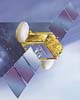
An Indian satellite designed to boost television and communication services was on Friday nudged into its final orbit, the national space agency said. "The satellite is now in the top orbit. Everthing is fine," S. Krishnamurthy, spokesman for the Bangalore-based Indian Space Research Organisation (ISRO), told AFP. |
|
|

| The content herein, unless otherwise known to be public domain, are Copyright 1995-2006 - SpaceDaily.AFP and UPI Wire Stories are copyright Agence France-Presse and United Press International. ESA PortalReports are copyright European Space Agency. All NASA sourced material is public domain. Additionalcopyrights may apply in whole or part to other bona fide parties. Advertising does not imply endorsement,agreement or approval of any opinions, statements or information provided by SpaceDaily on any Web page published or hosted by SpaceDaily. Privacy Statement |