|
 |
 |
 |
 |
 |
 |
 |
 |

 |
Strong And Light Building Material Invented
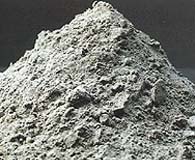
Sydney (UPI) Jul 31, 2006 Australian university researchers have developed a strong, lightweight building material they believe might sell well in nations such as China and India. Coal-burning power plants in China and India generate millions of tons of fly ash each year, spending millions of dollars disposing of the fine powder that's loaded with toxic chemicals. Yet, Obada Kayali and Karl Shaw of the University of New South Wales note in the Middle East there are very few coal fired power stations and an acute shortage of durable building materials because of the lack of suitable clay, aggregate and sand. That, they said, creates a market for high-quality, light-weight building materials. The scientists have developed bricks and building aggregate that can be manufactured entirely from waste fly ash and save on construction costs. The product is 28 percent lighter and 24 percent stronger than comparable clay bricks, resulting in lighter structures, shallower foundations, cheaper transportation, and less usage of cement and steel reinforcement. The technology been licensed in the British and U.S. markets. The researchers are now seeking interest from companies wanting to develop the technology for China, Japan, Southeast Asia, Europe and India.
Source: United Press International Community Email This Article Comment On This Article Related Links Powering The World in the 21st Century Space Technology News - Applications and Research
 Composite Technology to Improve Tactical Shelters
 Hill AFB UT (SPX) Jul 27, 2006
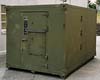
The 84th Combat Sustainment Group, Tactical Shelter, Radome, and Tower Program Office is responsible for management of Air Force hard wall tactical shelters. Tactical shelters are used to house communications electronic gear for fixed or mobile deployment. The shelters can be configured as command posts, briefing rooms, medical facilities, etc. |
|
|

| The content herein, unless otherwise known to be public domain, are Copyright 1995-2006 - SpaceDaily.AFP and UPI Wire Stories are copyright Agence France-Presse and United Press International. ESA PortalReports are copyright European Space Agency. All NASA sourced material is public domain. Additionalcopyrights may apply in whole or part to other bona fide parties. Advertising does not imply endorsement,agreement or approval of any opinions, statements or information provided by SpaceDaily on any Web page published or hosted by SpaceDaily. Privacy Statement |