|
 |
 |
 |
 |
 |
 |
 |
 |

 |
Stones Did Not Help Dinosaurs' Digestion
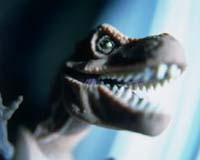
Tubingen, Germany (UPI) Dec 20, 2006 German scientists say their research suggests the idea that dinosaurs swallowed stones to help them digest food might be incorrect. Many dinosaurs had narrow, pointed teeth that were more suited to tearing off plants rather than chewing them. So many researchers assumed the giant animals were helped by stones they swallowed, which acted as a kind of gastric mill. But Oliver Wings of the Institute of Earth Sciences at the University of Tubingen, and Martin Sander from the University of Bonn have cast doubt on the theory. For the study, the scientists offered stones such as limestone, rose quartz and granite as food to ostriches -- relatives of dinosaurs. After the ostriches had been slaughtered, the scientists investigated the gastric stones. It became clear the stones wore out quickly in the muscular stomach and were not polished. That suggests they were not remains of a gastric mill, Sander said. The researchers believe, instead of stones, the intestines of dinosaurs were formed in such a way that food was retained for a very long time to improve the digestive process. The study is detailed in the current issue of the Proceedings of the Royal Society. Community Email This Article Comment On This Article Related Links Darwin Today At TerraDaily.com Darwin Today At TerraDaily.com
 "Heart Of Borneo" Reveals Astonishing Array Of New Species
 Geneva (AFP) Dec 19, 2006
In the second remarkable biodiversity find this year, researchers announced on Tuesday they had identified at least 52 new species of animals and plants on the island of Borneo. The new discovery including 30 unique species of fish, two new species of tree frog, 16 species of ginger, three tree species and a large-leafed species of plant seen nowhere else in the world, the wildlife group WWF said in a press release. |
|
|

| The content herein, unless otherwise known to be public domain, are Copyright 1995-2006 - SpaceDaily.AFP and UPI Wire Stories are copyright Agence France-Presse and United Press International. ESA PortalReports are copyright European Space Agency. All NASA sourced material is public domain. Additionalcopyrights may apply in whole or part to other bona fide parties. Advertising does not imply endorsement,agreement or approval of any opinions, statements or information provided by SpaceDaily on any Web page published or hosted by SpaceDaily. Privacy Statement |