|
 |
 |
 |
 |
 |
 |
 |
 |

 |
Sri Lanka Finds 35 New Amphibian Species, But Shrinking Habitat A Threat
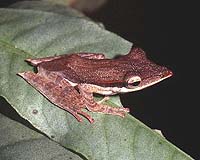
Colombo (AFP) Jun 29, 2005 Conservationists in Sri Lanka, the world's top spot for frogs, have discovered 35 new species of the amphibians - only to find that another 19 species have died out. Sri Lanka's Wildlife Heritage Trust, in a report to be published Thursday, blames habitat loss on the tropical island for the die-off. "The ravages of habitat loss in Sri Lanka's once rain-forested wet zone have been severe, and there is a compelling argument for intensive conservation management of the surviving forest," the Trust's Rohan Pethiyagoda wrote in the report. In a decade-long study, a Wildlife Heritage Trust team found evidence of 35 new frog species, confirming the Indian Ocean island as the world's number one spot for frogs, with more than 200 known species, ahead even of rainforest-rich, biodiverse Costa Rica, Pethiyagoda told AFP. They also found other previously unknown biodiversity - 50 new snail species, 16 new crabs, seven new lizards and an as yet unknown species of mouse deer, he said. "A lot of people thought we had documented all the species during the time of the British (1815-1948), but what we are discovering is that it is not the case and we are finding more," the internationally acclaimed conservationist wrote in the latest Raffles Bulletin of Zoology, to be published Thursday. "These discoveries provide, however, little cause for jubilation," he said. According to the World Conservation Union, 19 of the 34 amphibian species identified as extinct worldwide are from Sri Lanka, Pethiyagoda said. Mourning the lack of effort made to protect the animals and their inland habitat, he said: "I wish they had been affected by the tsunami because then we would have got some foreign assistance for conservation." While the December tsunami killed some 31,000 people and damaged the island's fragile coral reefs, it did not affect the frog population because they were not concentrated near coastlines as they dislike salt water, he said. Sri Lanka may be the country with the highest number of endemic frog species, but it has also seen the fastest die-off, he said. The timeline and the causes of the extinction of the 19 species, however, were still poorly understood, Pethiyagoda said. "We can't be sure when exactly that happened, and we don't know for sure what caused the extinction," he said. "It could be disease or loss of their habitat, because in this country we don't have the practice of eating frogs." His research calls for greater conservation in Sri Lanka, where only 750 square kilometres (290 square miles) of an original 16,000 square kilometres (6,177 square miles) of rainforest remain. Pethiyagoda said he first noticed the rich variety of Sri Lanka's frog life while studying freshwater fish and crabs in the early 1990s. "Our unearthing of this remarkable speciosity in Sri Lanka Philautus (frogs) was accidental," Pethiyagoda wrote. The find was "indeed serendipitous", but "the evidence we present of a large scale extinction is indeed sobering." Community Email This Article Comment On This Article Related Links SpaceDaily Search SpaceDaily Subscribe To SpaceDaily Express Darwin Today At TerraDaily.com
 Panda Paparrazi Swoons Over Cub Tai Shan At Washington Zoo
 Washington (AFP) Nov 29, 2005
There was 'panda-monium' at Washington's National Zoo on Tuesday as fluffy giant panda cub Tai Shan cavorted for the cameras, in his first encounter with the media pack. |
|
|

| The content herein, unless otherwise known to be public domain, are Copyright 1995-2006 - SpaceDaily.AFP and UPI Wire Stories are copyright Agence France-Presse and United Press International. ESA PortalReports are copyright European Space Agency. All NASA sourced material is public domain. Additionalcopyrights may apply in whole or part to other bona fide parties. Advertising does not imply endorsement,agreement or approval of any opinions, statements or information provided by SpaceDaily on any Web page published or hosted by SpaceDaily. Privacy Statement |