|
 |
 |
 |
 |
 |
 |
 |
 |

 |
Spirit Completes Fourth Mile On Mars
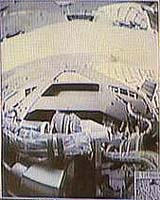
Pasadena CA (SPX) Feb 07, 2006 Spirit is healthy and continues to make progress toward "Home Plate" after driving more than 150 meters (492 feet), taking images, making atmospheric observations, and analyzing geology. Spirit completed two diagnostic tests of the dynamic brakes on sol 735 (Jan. 27, 2006) after the team detected a dynamic brake fault associated with the left-front and right-rear steering actuators on Sol 733. The tests were copies of tests that were run after a similar anomaly on sol 265 for Spirit. Also on sol 735, the rover performed a small wheel wiggle after its drive to test the dynamic brakes. The wheel wiggle steered the wheels slightly, then steered them straight. No dynamic brake warnings were observed. The intermittent behavior of the relay status that controls the dynamic brakes, as well as the results of the diagnostic activities, are consistent with the behavior observed after the sol 265 anomaly. The team continued with the same resolution, which was to instruct the rover to ignore the dynamic brake error status. Driving has continued with normal steering function. Sol-by-sol summaries: Sol 735 (Jan. 27, 2006): Rover planners had a busy day of preparing and executing a dynamic brake diagnostic test in addition to a day of driving. Spirit drove 26.3 meters (86.3 feet) without using the steering motors on the left-front and right-rear wheels. Results of the diagnostic testing were consistent with behavior following an anomaly on sol 265 (Oct. 1, 2004). Spirit also acquired panoramic camera images of "Allegheny Ridge" and "YuGong." Sol 736: Rover science team members discovered an interesting rock and decided to spend a couple of days studying it with instruments on Spirit's robotic arm. Spirit collected a mosaic of microscopic images and collected spectrographic information with the Moessbauer instrument. Spirit took panoramic camera images of rock targets called "Xing Tian," "GongGong," "Luo Zu," "Sui Ren," "Cang Jie," and used the miniature thermal emission spectrometer to examine "Cang Jie," "Sui Ren," "Ho Ji," and "Luo Zu." Sol 737: Spirit made remote sensing observations of Ho Ji and atmospheric observations using the rover's panoramic camera. Sol 738: Spirit began driving around a rocky ridge that separated the rover from Home Plate, traveling an additional 33.7 meters (111 feet). Following a complete analysis of diagnostic tests run on sol 735, rover drivers decided to follow the same recovery plan used after the sol 265 anomaly, and Spirit continued to drive without incident. Sol 739: Spirit drove 30.5 meters (100 feet). The rover stopped after 5 meters (49 feet) of autonomous navigation because of a sequencing error. Rover drivers added an automated flight check to the sequence to catch future errors of a similar nature. Spirit was unable to complete most of the planned post-drive imaging. Sol 740: Rather than wait another day for Spirit to take a set of post-drive images, rover drivers gave Spirit the go-ahead to navigate independently using onboard instruments. Spirit drove 17 meters (56 feet) autonomously. Sol 741: Spirit drove 43.5 meters (143 feet) to the top of a gently sloping ridge, providing an excellent view of the path to Home Plate. Sol 742 (Feb. 3, 2006): Spirit prepared for a day of driving 30 meters as directed by rover drivers plus driving 15 meters to 20 meters autonomously. Odometry: As of sol 741 (Feb. 2, 2006), Spirit's total odometry was 6,430 meters (exactly 4 miles). Community Email This Article Comment On This Article Related Links Mars rovers at JPL Mars News and Information at MarsDaily.com Lunar Dreams and more
 Hardened Lava Meets Wind on Mars
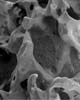 Pasadena CA (SPX) Feb 6, 2006
NASA's Mars Exploration Rover Spirit used its microscopic imager to capture this jagged mini-landscape on a rock mission scientists have called "GongGong." Measuring only 1.2 inches (3 centimeters) across, its surface records two of the most important and violent forces in the history of Mars - volcanoes and wind. |
|
|

| The content herein, unless otherwise known to be public domain, are Copyright 1995-2006 - SpaceDaily.AFP and UPI Wire Stories are copyright Agence France-Presse and United Press International. ESA PortalReports are copyright European Space Agency. All NASA sourced material is public domain. Additionalcopyrights may apply in whole or part to other bona fide parties. Advertising does not imply endorsement,agreement or approval of any opinions, statements or information provided by SpaceDaily on any Web page published or hosted by SpaceDaily. Privacy Statement |