|
 |
 |
 |
 |
 |
 |
 |
 |

 |
Spirit And Opportunity Continue Their Quest For Life On Mars
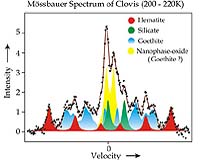
Washington (AFP) Jan 05, 2005 One year after they landed on Mars and confirmed that water once flowed on the red planet, the US robot probes Spirit and Opportunity continue their relentless exploration for the origins of life, far surpassing their three-month mission expectancy. Spirit landed on January 3, 2004, while its twin probe Opportunity touched down three weeks later. Both launched one of the most successful space missions of all time. "I never, ever would have imagined the opportunity to be literally standing here a year later and say, yet again, we're back and we're still on Mars," outgoing National Aeronautics and Space Administration administrator Sean O'Keefe told scientists running the Mars mission at the Jet Propulsion Laboratory (JPL) this week. O'Keefe, who is expected to continue at NASA until a successor is named in February, said the twin geological rovers were "extraordinary pieces of machinery" that have yielded very important discoveries -- the biggest of 2004, according to Science magazine. Above all, O'Keefe noted the evidence Opportunity found that a vast deposit of salt-water once sloshed around the Planum Meridiani in Mars' valley-shaped equatorial region. Spirit, which landed in the newly named Gusev crater, fully opposite Opportunity's landing site, in December found goethite in a rock formation, another sign there once was water on Mars since the mineral is formed only in the presence of water in ice, liquid or vapor form, NASA said. "What it tells us is that the climate, the atmosphere of our closest neighbor was once dramatically different and perhaps conducive to life," said O'Keefe, who addressed the JPL scientists in Pasadena, California, on the anniversary of Spirit's arrival on Mars. "Understanding why that changed may well provide a whole new perspective of our own place in the solar system, in this galaxy and, indeed, in the broader universe," he added. For David Grinspoon, planetary scientist at Southwest Research Institute in Boulder, Colorado, the probes' findings "also tells us that we must go back to Mars with equipment to look for fossils or chemical signs of past Martian life." "The rocks don't lie. Their chemistry and detailed texture reveal the story," he wrote in an op-ed piece published Tuesday by The Los Angeles Times. Grinspoon also referred to other signs of a Mars' watery past seen in many photos of valleys and ancient lakes beamed back by the two probes and previous Mars missions. "Before Opportunity, such a search would have seemed far-fetched; now it is not only reasonable but obligatory," said the author of "Planetary Planets: The Natural Philosophy of Alien Life." "If Mars was wet but never 'alive', then perhaps the conditions we believe to be necessary for life are not sufficient," wrote Grinspoon. "In that case, dumb luck might have played a larger role in our existence than we like to think, and the universe might be a lonely place indeed for inhabited worlds like ours," he added. Community Email This Article Comment On This Article Related Links Mars at JPL MERs at Cornell SpaceDaily Search SpaceDaily Subscribe To SpaceDaily Express Mars News and Information at MarsDaily.com Lunar Dreams and more
 Spirit Heading To 'Home Plate'
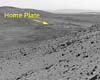 Pasadena CA (JPL) Jan 09, 2006
Last week Spirit completed robotic-arm work on "El Dorado." The rover used all three of its spectrometers plus the microscopic imager for readings over the New Year's weekend. |
|
|

| The content herein, unless otherwise known to be public domain, are Copyright 1995-2006 - SpaceDaily.AFP and UPI Wire Stories are copyright Agence France-Presse and United Press International. ESA PortalReports are copyright European Space Agency. All NASA sourced material is public domain. Additionalcopyrights may apply in whole or part to other bona fide parties. Advertising does not imply endorsement,agreement or approval of any opinions, statements or information provided by SpaceDaily on any Web page published or hosted by SpaceDaily. Privacy Statement |