
 |
 |
 |
 |
 |
 |
 |
 |
 |

 |
Speed of Light May Not be Constant
Toronto - October 25, 1999 - A U of T professor believes that one of the most sacrosanct rules of 20th- century science -- that the speed of light has always been the same -- is wrong. Ever since Einstein proposed his special theory of relativity in 1905, physicists have accepted as fundamental principle that the speed of light -- 300 million metres per second -- is a constant and that nothing has, or can, travel faster. John Moffat of the physics department disagrees -- light once travelled much faster than it does today, he believes. Recent theory and observations about the origins of the universe would appear to back up his belief. For instance, theories of the origin of the universe -- the "Big Bang"-- suggest that very early in the universe's development, its edges were farther apart than light, moving at a constant speed, could possibly have travelled in that time. To explain this, scientists have focused on strange, unknown and as-yet-undiscovered forms of matter that produce gravity that repulses objects. Moffat's theory -- that the speed of light at the beginning of time was much faster than it is now -- provides an answer to some of these cosmology problems. "It is easier for me to question Einstein's theory than it is to assume there is some kind of strange, exotic matter around me in my kitchen." His theory could also help explain astronomers' discovery last year that the universe's expansion is accelerating. Moffat's paper, co- authored with former U of T researcher Michael Clayton, appeared in a recent edition of the journal Physics Letters.
Email This Article Comment On This Article Related Links Space
 Satellite Launch To Boost DTH In India
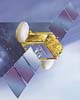 Calcutta, India (SPX) Dec 28, 2005
The successful launch Thursday of India's heaviest satellite from spaceport of Kourou in French Guyana may have boosted the country's space research efforts to yet another level, but it has also lifted the spirits of at least three Direct-To-Home televisions broadcasters, one of which has been waiting for years to launch its services in India. |
|
|

|
|
|
|
|
|
|
|
|
|
|
|
| The content herein, unless otherwise known to be public domain, are Copyright 1995-2006 - SpaceDaily.AFP and UPI Wire Stories are copyright Agence France-Presse and United Press International. ESA PortalReports are copyright European Space Agency. All NASA sourced material is public domain. Additionalcopyrights may apply in whole or part to other bona fide parties. Advertising does not imply endorsement,agreement or approval of any opinions, statements or information provided by SpaceDaily on any Web page published or hosted by SpaceDaily. Privacy Statement |

