|
 |
 |
 |
 |
 |
 |
 |
 |

 |
Space summit looks to the future from India
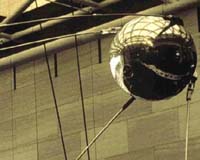
Hyderabad, India (AFP) Sept 24, 2007 Global space scientists gathered here Monday heard a call from India to join forces to push the boundaries of technology further and tap the resources of the universe. New Delhi plans to undertake 60 outer-space missions, including one to the moon, over the next five years, said Prithviraj Chavan, a junior minister in the prime minister's office, at the opening of the meeting. India is seeking advances in satellite navigation, communications, space transportation and earth observation, Chavan told the 2,000 delegates in this southern Indian city. "All this will provide increased opportunities for commercial and scientific cooperation with India," said Chavan, standing in for Prime Minister Manmohan Singh, who is recovering from prostate surgery. The delegates, including scientists, astronauts, satellite manufacturers and launchers, are to discuss how to profit from the expected strong growth in the space industry over the next decade. Paris-based market research firm Euroconsult estimates the sector will grow to 145 billion dollars over the next 10 years, from 116 billion dollars in 1997-2006, as space-faring nations launch more satellites and deep-space probes. Advances in space exploration can be expensive and risky, said Chavan, adding: "In the face of many pressing priorities, we can ill-afford the duplication of efforts and resources. "The question today is not whether we should cooperate but rather, can we afford not to cooperate?" India has already launched satellites to map natural resources, predict the weather and to boost telecommunications in rural areas, and is looking to put its almost five-decade-old space programme to commercial use. Mars, the completion of an international orbital space station by 2010 and efforts to combat earth-threatening asteroids through space technology top the week-long agenda in Hyderabad. Delegates met under tight security, with hundreds of police deployed at the Hyderabad International Conference Centre following twin blasts in the city last month that left 43 people dead. The event is taking place 50 years after the start of the space age, which was ushered in by the launch of the Sputnik 1 satellite on October 4, 1957 by the then Soviet Union. Moscow's lead spurred the United States to establish the National Aeronautics and Space Administration, or NASA, the following year, setting off a Cold War space race that ended with the collapse of the Soviet Union. Space scientists will use the congress to commemorate that pioneering launch, take stock of how far their industry has come and map future endeavours. One-and-a-half decades after the end of the Cold War, the imperative is global cooperation in exploring outer space and tapping the resources of the universe, said James Zimmerman, head of the Paris-based International Astronautical Federation. "Space activities are challenging, exciting and ultimately rewarding," he said. "They may be national in character but offer new opportunities for cooperation." Space systems are also being used extensively to support intelligence gathering and military operations on earth. There is a risk of extending the world's conflicts into outer space and turning it into a "battlefield of the future," warned Chavan, the Indian minister. "The decisive advantage that space systems provide also makes them vulnerable targets for offensive action," he said. "In a world engulfed by conflicts and terrorism, protection of space assets is important." Community Email This Article Comment On This Article Related Links Space Tourism, Space Transport and Space Exploration News
 Russia aims for new far east space launch pad by 2020
 Moscow (AFP) Sept 21, 2007
The head of the Russian space agency Roskosmos said on Friday he hoped a new spacecraft launch site would be built in the Russian far east by 2020 to supplement the Baikonur cosmodrome in Kazakhstan. |
|
|

| The content herein, unless otherwise known to be public domain, are Copyright 1995-2007 - SpaceDaily.AFP and UPI Wire Stories are copyright Agence France-Presse and United Press International. ESA Portal Reports are copyright European Space Agency. All NASA sourced material is public domain. Additional copyrights may apply in whole or part to other bona fide parties. Advertising does not imply endorsement,agreement or approval of any opinions, statements or information provided by SpaceDaily on any Web page published or hosted by SpaceDaily. Privacy Statement |