
 |
 |
 |
 |
 |
 |
 |
 |
 |

 |
Space key to mankind's survival: NASA chief
Washington (AFP) Sept 25, 2008 Mankind's very survival depends on the future exploration of space, said NASA chief Michael Griffin in an interview with AFP marking the 50th anniversary of the US space agency. This journey, said the veteran physicist and aerospace engineer, is full of unknowns and has only just begun. "Does the survival of human kind depend upon it? I think so," he said. Griffin compared the first walk on the Moon with Christopher Columbus's first voyage to the Americas. "He travelled for months and spent a few weeks in the Americas and returned home. He could hardly have said to have explored the New World. "So we have just begun to touch other worlds," said Griffin. "I think we must return to the Moon because it's the next step. It's a few days from home," he said, adding Mars was also "only a few months" from Earth. But Griffin acknowledged that like the 15th century explorers who embarked on their adventures without knowing what they would find, a leap of faith is required for space travel. "As we move out in our solar system, expanding human presence, we can't prove what we will find will be useful. "It was understood in Columbus's time that if voyagers discovered new lands they would find valuable things. We can't prove today that we can exploit what we find to the benefit of humankind." However, in the long run, Griffin believes "human populations must diversify if it wishes to survive." In explaining his goals for NASA in testimony to Congress in 2004, Griffin said: "The single overarching goal of human space flight is the human settlement of the solar system, and eventually beyond. "I can think of no lesser purpose sufficient to justify the difficulty of the enterprise, and no greater purpose is possible." In this effort, Griffin told AFP that cooperation between nations is key if mankind's calling to the final frontier is to be realized. "The space station is much bigger and better and more impressive and more productive as a result of the partnership with Canada, Russia, Europe, and Japan, than it would have been if we had done it ourselves," he said. However, the NASA head lamented the end of the space shuttle program in 2010, concerned that in the interim period at least the United States will be reliant on other nations to reach the heavens. "There will be a gap. I don't like it but there it is. For the US to lose even for a period of time independent access to space, I don't think it's a good thing." In the time between the shuttle retires and the new generation of US spacecraft -- Orion -- gets off the ground, US astronauts will have to rely on the Russian Soyuz spacecraft to reach the International Space Station. "I think that is a dangerous position to be in," said Griffin. "If anything at all in that five-year period goes wrong with the Russian Soyuz ... that is a great concern." The rise of China as an emerging power in space may also give Griffin cause for concern, but he also sees it as an opportunity. Beijing's ambitious space program takes a giant leap forward on Thursday when three astronauts blast off on a mission to undertake the country's first space walk. "I certainly do not see China as a threat," Griffin said. "I have no doubt that links with China and the Western world will become stronger." To the question of whether China could be a partner with NASA in a future Moon mission, Griffin remained upbeat: "Yes it's absolutely possible to see China as part of a return to the Moon, a collaboration to return to the moon." "There must be transparency and openness if we fly humans into space," Griffin added, noting that to achieve the highest potential, cooperation is key. "I am confident that some day China will be transparent ... not today, not tomorrow, but I believe in a not so distant future, China can be a partner." Community Email This Article Comment On This Article Share This Article With Planet Earth
Related Links Space Tourism, Space Transport and Space Exploration News
 It Takes A Nation To Build A Rocket
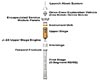 Huntsville AL (SPX) Sep 25, 2008
If you don't follow NASA more closely than noting a space shuttle launch or space walk on the International Space Station, you may not be aware that America is building a new rocket. |
|
|

| The content herein, unless otherwise known to be public domain, are Copyright 1995-2007 - SpaceDaily.AFP and UPI Wire Stories are copyright Agence France-Presse and United Press International. ESA Portal Reports are copyright European Space Agency. All NASA sourced material is public domain. Additional copyrights may apply in whole or part to other bona fide parties. Advertising does not imply endorsement,agreement or approval of any opinions, statements or information provided by SpaceDaily on any Web page published or hosted by SpaceDaily. Privacy Statement |

 del.icio.us
 Digg
Digg Reddit
 YahooMyWeb
 Google
 Facebook