|
 |
 |
 |
 |
 |
 |
 |
 |

 |
Space Weather Forecasting Shifts into High Gear
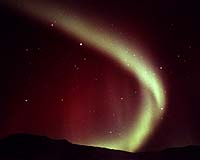
Boulder - Sep 19, 2002 Over the next decade, forecasts of spectacular northern lights and other solar-generated events will become as commonplace as today's thunderstorm predictions, say scientists meeting this week in Boston to plan the first five years of accelerated space weather research. To aid the effort, the National Center for Atmospheric Research (NCAR) will provide a computer model of Earth's upper atmosphere and unique information on solar dynamics, both from NCAR's High Altitude Observatory. The NCAR contribution will be part of a more comprehensive research model that will mimic space weather, from solar explosions to auroras (southern and northern lights) to geomagnetic storms on Earth. The new technology will help scientists understand solar-terrestrial activity and eventually predict when and how it will affect activities on Earth. They expect to produce space weather forecasts similar to today's daily weather forecasts by the end of this decade. The National Science Foundation is funding the multi-institutional effort, called the Center for Integrated Space Weather Modeling (CISM), with a $20 million grant over five years. NCAR's share, $3.3 million, will fund new research and modeling efforts on the Sun and in the upper regions of Earth's atmosphere, known as the ionosphere and thermosphere, as well as educational activities. "In space weather we're about where weather forecasters were forty years ago," says NCAR director Tim Killeen, a principal investigator for CISM. "But we have the advantage that the computing power and the modeling know-how already exist. And now we've got the resources to make significant progress within just a few years." "The big solar energy blasts move fast and can have a huge impact on the ionosphere," says NCAR scientist Stan Solomon. "With the planned CISM model, it's within our technical reach to advance from the current system of alerts and warnings for these events to more precise numerical forecasts. These can give us enough lead time-- hours to days--to prepare for possible disruptions to communications and navigation. And we'll try to predict when and where people can see an aurora." The ionosphere and thermosphere are the final link in the space weather chain stretching from the Sun to Earth. It is in these far upper regions that important solar-terrestrial effects occur. Satellite orbits can drop in altitude because of increased drag in the upper atmosphere during high solar activity and geomagnetic storms. Communications and navigation systems are disrupted by changes in the ionosphere in Earth's polar and equatorial regions. Large currents flowing in the ionosphere can induce currents in ground wires, disrupting power systems and telephone lines. The most dramatic manifestations of solar energy in Earth's atmosphere are the brilliant blazes of color in polar skies, known as auroras. Roberta Johnson, an upper atmosphere scientist at NCAR and head of UCAR's Education and Outreach Program, will be channeling some of this newfound knowledge toward the public through UCAR's Windows to the Universe Web site. Nonscientists can experience what it's like to run the computer model and browse actual model results. A Boulder- based teacher will be invited to help NCAR Outreach staff develop classroom activities for exploring the upper atmosphere. Later in the program an NCAR workshop will train local teachers on presenting space weather materials in the classroom. "Understanding the outer atmosphere is daunting," says NCAR physicist and CISM researcher Alan Burns. "We've got chunks of data concentrated in tiny areas in the midst of voluminous, data-empty space. But we've got to start somewhere. That's what science is all about." Burns, Johnson, Killeen, and Solomon are upper atmosphere scientists in NCAR's High Altitude Observatory division. Ray Roble, also in HAO, led the team that developed the NCAR model. Sarah Gibson conducts the solar dynamics research at NCAR for CISM. NSF is NCAR's primary sponsor. Community Email This Article Comment On This Article Related Links CISM home page Windows to the Universe SpaceDaily Search SpaceDaily Subscribe To SpaceDaily Express Dirt, rocks and all the stuff we stand on firmly
 Environmental Damage Threatens Human Health
 Bangkok (AFP) Dec 9, 2005
Environmental damage threatens human health and may have contributed to the spread of new diseases like bird flu and SARS, the World Health Organization said in a report Friday. |
|
|

| The content herein, unless otherwise known to be public domain, are Copyright 1995-2006 - SpaceDaily.AFP and UPI Wire Stories are copyright Agence France-Presse and United Press International. ESA PortalReports are copyright European Space Agency. All NASA sourced material is public domain. Additionalcopyrights may apply in whole or part to other bona fide parties. Advertising does not imply endorsement,agreement or approval of any opinions, statements or information provided by SpaceDaily on any Web page published or hosted by SpaceDaily. Privacy Statement |