|
 |
 |
 |
 |
 |
 |
 |
 |

 |
Space Technology Geared To The Car
Paris (ESA) Sep 19, 2002 From 28 September to 13 October, the European Space Agency (ESA) makes its debut at the Paris Motor Show (Porte de Versailles, Hall 2/2, stand 515). Its presence might seem surprising but on closer analysis is fully justified; over 40 years of breakthroughs and advances have left the space sector ready to play a full role in the car industry. The space sector now represents all that is truly successful and innovative in technological research. Launching rockets, manoeuvring satellites and sending people into space calls for technologies that are highly relevant to the car manufacturing industry. These technologies can be used for producing vehicles that are more efficient, more economical, safer, more environmentally friendly and smarter too.
Performance and safety Journeying through it to study the planets, Sun and stars calls for very tough but also light, reliable materials. Such materials are now contributing to car safety and efficiency. An example is the airbag, which is based on a technology developed for space.
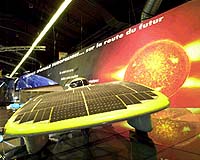
Cheap Clean Energy
Navigation What has been done in space can also be achieved on Earth. This car of the future, which will be more efficient and economical, more in tune with the environment and more intelligent, is no longer a product of science fiction but a reality stemming from space exploration. Community Email This Article Comment On This Article Related Links Nuna wins the World Solar Challenge! Space technology for McLaren at the British Grand Prix Navigate via the web with the SISNeT receiver ESA's Navigation homepage ESA brochure 'Cars and Trucks' (.pdf 1347 Kb) SpaceDaily Search SpaceDaily Subscribe To SpaceDaily Express The latest information about the Commercial Satellite Industry
 Globalstar Buys Central American Satellite Gateway Operator
 Milpitas CA (SPX) Jan 11, 2006
Globalstar recently announced that it has signed a definitive agreement to acquire 100% of the stock of Globalstar Americas Telecommunications, Globalstar Americas Holdings, and Astral Technologies Investments. |
|
|

| The content herein, unless otherwise known to be public domain, are Copyright 1995-2006 - SpaceDaily.AFP and UPI Wire Stories are copyright Agence France-Presse and United Press International. ESA PortalReports are copyright European Space Agency. All NASA sourced material is public domain. Additionalcopyrights may apply in whole or part to other bona fide parties. Advertising does not imply endorsement,agreement or approval of any opinions, statements or information provided by SpaceDaily on any Web page published or hosted by SpaceDaily. Privacy Statement |