|
 |
 |
 |
 |
 |
 |
 |
 |

 |
Space Station Using GPS In Attitude Control
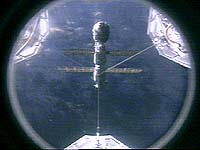
Houston - Jun 05, 2002 The Global Positioning System, used in a wide variety of applications on Earth, is performing a new task in space. It is determining the attitude, position and speed of the International Space Station. This is the first successful use of GPS data in attitude control of a spacecraft, NASA officials and scientists believe. It is working well, feeding information on the station's attitude to systems that control its orientation in space. GPS also is providing more precise speed and position data than had been available. "As far as I know, no one else is using GPS operationally for attitude determination," said Johnson Space Center's Susan Gomez, SIGI chief engineer. SIGI stands for Space Integrated Global Positioning System/Inertial Navigation System. The space station uses only the GPS part of that system. GPS antennas, brought to the station on the S-Zero (S0) Truss in April, were the final piece of the system. The antennas are situated in a 1.5- by 3-meter (5- by 10-foot) rectangle on the truss � far enough apart to precisely determine attitude, but close enough together to resolve other issues. Also, data received by the antenna can be distorted by "multipath," degradation of the GPS signal because of the reflectivity of large objects on the space station, including the 240-foot-long solar wings. As the station is assembled in space, the multipath changes. Multipath (the phenomena that causes "ghosting" on television sets) had to be calculated using new techniques, including mathematic models verified by ground tests and tests during space shuttle flights. The antennas feed information to two GPS receivers in the U.S. laboratory Destiny through 100-foot cables. Because the length of the cables changes the GPS signal, engineers developed special software for the receivers, which came to the station in Destiny on STS-98 (station flight 5A) in February 2001. "This represents a considerable improvement in the accuracy and immediacy of information available on the precise position of the ISS," said Bill Gerstenmaier, deputy Space Station Program manager. "Having that information can improve the quality of data from some experiments on the station." The GPS position of the station, which is moving at about five miles a second, is accurate to within 100 meters and is updated continuously. Previously the station's position was determined using ground tracking and other techniques. That information was quite accurate, but generally was updated only once a day. Just before an update, the actual and propagated position of the station could differ by as much as 10,000 meters. The Global Positioning System includes 24 satellites and one or more orbiting spares. The 24 satellites are at an altitude of about 12,600 statute miles in six orbits (four satellites in each) inclined about 55 degrees to the equator. Community Email This Article Comment On This Article Related Links SpaceDaily Search SpaceDaily Subscribe To SpaceDaily Express GPS Applications, Technology and Suppliers
 Galileo GIOVEA Using Marotta Equipment For Its Propulsion Systems
 Cheltenham, England (SPX) Jan 09, 2006
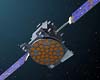
Marotta UK is pleased to announce that it designed, developed and qualified equipment for the cold gas propulsion systems on board the Galileo GIOVE-A, part of Europe's Galileo navigation program, successfully launched by Surrey Satellite Technology (SSTL). |
|
|

| The content herein, unless otherwise known to be public domain, are Copyright 1995-2006 - SpaceDaily.AFP and UPI Wire Stories are copyright Agence France-Presse and United Press International. ESA PortalReports are copyright European Space Agency. All NASA sourced material is public domain. Additionalcopyrights may apply in whole or part to other bona fide parties. Advertising does not imply endorsement,agreement or approval of any opinions, statements or information provided by SpaceDaily on any Web page published or hosted by SpaceDaily. Privacy Statement |