|
 |
 |
 |
 |
 |
 |
 |
 |

 |
Space Solutions For Health
Paris (ESA) Apr 28, 2004 ESA today announced the launch of its 'Space Solutions' initiative, a business-to-business provider of know-how and technologies to industries in the wellness market. The launch was announced at an event featuring an address by ESA astronaut Andr� Kuipers, live from the International Space Station. Over the years, ESA has developed dozens of innovative technologies and methods to deal with the adverse effects of weightlessness and has applied the findings of space experiments to medicine, physiology, biology, chemistry, material sciences, physics and more. With the 'Space Solutions' initiative, ESA, supported by a network of partners, is positioning itself as a business-to-business provider of research opportunities, know-how and technologies for industries in the booming health and wellness markets. "At ESA, we help our astronauts cope with the challenges of spaceflight. To do so, we have developed unique solutions that we wish to see transferred to products that improve people's quality of life," said Michel Tognini, former astronaut and now Head of the European Astronaut Corps. "By creating the 'ESA Space Solutions' initiative we seek to convince industrial partners that association with space research and development can add value to their products". Surprising though it may seem, health and wellness are a core competency at ESA. The hostile environment of space poses a special challenge to the wellbeing of astronauts. Weightlessness, stress and increased exposure to radiation are just some of the factors whose effects researchers seek to combat. Many of the effects of spaceflight, which include bone loss, muscle loss, a weakened immune system and sensory disorientation, closely mimic the way our body degrades as it ages or is kept inactive. The combination of an increasingly older population and diseases associated with inactivity is causing one of the largest epidemics the world has ever witnessed. Several hundred million of people are being affected and healthcare systems are being pushed to the limit. ESA's know-how and technologies offer crucial help. To understand the effects of microgravity, researchers and medical doctors at ESA have developed innovative sensors to monitor astronauts' bodies as they live and work in space. These can be used on Earth to monitor babies, the elderly or patients. To combat the effects of living in space ESA has developed nutritional guidelines as well as exercise regimes and equipment that function � on Earth as much as in space. The very basis of space medicine is centred around prevention and active maintenance of health. Many products that use insights from ESA's research are already available in Europe. For example, Sudden Infant Death Syndrome (SIDS) could become a thing of the past with the development of a pyjama to be worn by babies. The Mamagoose pyjamas contain built-in sensors and an electronic signal processing and data collection unit. The processor is programmed with an alarm algorithm scanning the respiration patterns in order to detect dangerous situations and to produce an alarm signal. These sensors, algorithms and processors were all originally developed to monitor the condition of astronauts in orbit. People seeking to become healthier can also benefit from space research by using the 'Flywheel' resistance trainer. Used by astronauts to boost muscular performance in space and thus prevent muscle wastage, the trainer is now used by professional football players in Barcelona Football Club. This lightweight and compact system not only suits the needs of footballers but is also perfect for use at home. Aerogel is the most effective insulating material in the world. It was originally used to insulate probes sent to Mars and now lines the jackets commissioned for several Antarctic expeditions. Another example, the mechanics of McLaren's Formula 1 team all wear a thermo-regulating garment originally developed for astronaut's suits, while servicing the racing car in order to protect them from fire and heat. A number of promising avenues of research are ripe for commercialisation. The Mediet experiment consists of Mediterranean Diet elements, an innovative packaging system and an ergonomic food tray, which, it is hoped, will enable 'Earth-like' eating on board the International Space Station. Ways in which fresh food can be preserved for longer will also be examined during this experiment and, if successful, used on Earth. An innovative shock absorption system based on magneto-rheological fluids can compete with Nike's Air Max but can also be used in the prevention of foot injuries in diabetic patients. Many more validated products for active health might be available in the future if ESA and industries join forces to develop, validate, initiative and promote products based on advanced 'space solutions'. With ESA, the passengers of Spaceship Earth can increasingly benefit from the findings pioneered by European astronauts. Community Email This Article Comment On This Article Related Links ESA's Technology Transfer Programme SpaceDaily Search SpaceDaily Subscribe To SpaceDaily Express Space Medicine Technology and Systems
 Genomic Sequences Processed In Minutes, Rather Than Weeks
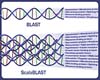 Richland WA (SPX) Jun 22, 2005
A new computational tool developed at the Department of Energy's Pacific Northwest National Laboratory is speeding up our understanding of the machinery of life - bringing us one step closer to curing diseases, finding safer ways to clean the environment and protecting the country against biological threats. |
|
|

| The content herein, unless otherwise known to be public domain, are Copyright 1995-2006 - SpaceDaily.AFP and UPI Wire Stories are copyright Agence France-Presse and United Press International. ESA PortalReports are copyright European Space Agency. All NASA sourced material is public domain. Additionalcopyrights may apply in whole or part to other bona fide parties. Advertising does not imply endorsement,agreement or approval of any opinions, statements or information provided by SpaceDaily on any Web page published or hosted by SpaceDaily. Privacy Statement |