|
 |
 |
 |
 |
 |
 |
 |
 |

 |
Space Industry Competition Fierce
Mountain View - March 23, 1998 - Competition is getting tough in the world markets for commercial, military and science satellites. Aggressive expansion of satellite networks and applications is making the satellite marketplace a dynamic high-growth environment and is creating an increasingly competitive industry. According to new strategic research from Frost & Sullivan, "World Markets for Commercial, Military, and Science Satellites," the industry has changed considerably in the last 20 years, giving way to new satellite-based applications and services. In 1997, the world satellite manufacturing market generated $11.5 billion in revenues, and the money is expected to continue rolling in. Commercial, military and science satellites are forecasted to boom in 2001 with more than 250 satellite launches. "The satellite industry is becoming increasingly competitive," said Telecommunications Industry Analyst Megan Marek. "Satellite manufacturers must form strategic alliances and partnerships, develop strong manufacturing processes, and strategically develop different types of satellite systems to remain competitive in the world satellite industry." U.S. manufacturers continue to lead, but Japanese companies are expanding their presence, and European manufacturers are consolidating to enhance their ability to compete. The commercial satellite market, the most dynamic sector in the industry, is expected to grow in terms of satellite deployments, but competition from land-line and wireless technologies remains high. Success depends on manufacturers producing cost-efficient systems while maintaining the systems integrity and reliability. In 1998, military satellite revenues are projected to increase as a result of the cyclical nature of satellite deployments. However, consistent spending allocations by governments and the ongoing maintenance of military satellite systems internationally will support revenues throughout the forecast period. As environmental threats continue to menace world ecosystems, countries are motivated to develop joint satellite programs to conduct space-related research. Technological advancements are driving this sector, and the ability to produce smaller satellites with superior price-performance ratios offers a competitive edge. Within the commercial sector, the market remains fairly concentrated with fewer industry participants making up a larger share of the market. The military market is primarily dominated by U.S. and Russian manufacturing companies. In 1997, Lockheed Martin held 100 percent of the market with its Navstar GPS satellites. Boeing, however, won the manufacturing contract for the next block to be launched beginning in the year 2002. The Russian KB Polyot also operates as a strong market contender. The science market is the most highly fragmented sector within the satellite industry with a ride range of manufacturers. In 1997, there were over 23 companies involved in the production of remote sensing. The space observation satellite sector is also composed of numerous satellite systems produced by different types of manufacturers. "Without addressing market opportunities and threats, manufacturers have little chance of gaining market share," said Marek. "While satellite technology has sometimes been thought of as a 'mature' technology, aggressive expansion of satellite networks and applications are making satellite technologies and the satellite marketplace a dynamic, evolutionary, risky, and high-growth environment." "World Markets for Commercial, Military, and Science Satellites" provides its users with strategies for facing market challenges and coming out on top. With detailed information about satellite programs, launches, and technology trends, it is the only study available to offer such a comprehensive and widespread perspective of the satellite industry. The technologies reviewed include C-band, Ku-band, X-band, Ka-band, V-band, L-band, S-band, remote sensing, global positioning systems, space observation, earth observation, code division multiple access, frequency division multiple access, time division multiple access, geostationary earth orbit, low earth orbit, medium earth orbit, propagation delay, data handling, attitude and orbit control, telemetry tracking and command, frequency generator, local oscillator, amplifier, receiver, antenna subsystem, satellite bus and structure, and thermal subsystem. This telecommunications industry research has integrated the Market Engineering consulting philosophy into the entire research process. Critical phases of this research included:
All of the vital elements of this system help the market participants navigate successfully through the telecommunications market. Frost & Sullivan is an international marketing consulting company that monitors the telecommunications industry for market trends, market measurements and strategies. This ongoing research is utilized to update a series of research publications such as "#5649-60 U.S. Private Satellite Network Markets" and to support industry participants with customized consulting needs.
Email This Article Comment On This Article Related Links Space
 Satellite Launch To Boost DTH In India
 Calcutta, India (SPX) Dec 28, 2005
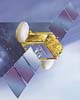
The successful launch Thursday of India's heaviest satellite from spaceport of Kourou in French Guyana may have boosted the country's space research efforts to yet another level, but it has also lifted the spirits of at least three Direct-To-Home televisions broadcasters, one of which has been waiting for years to launch its services in India. |
|
|

|
|
|
|
|
|
|
|
|
|
|
|
| The content herein, unless otherwise known to be public domain, are Copyright 1995-2006 - SpaceDaily.AFP and UPI Wire Stories are copyright Agence France-Presse and United Press International. ESA PortalReports are copyright European Space Agency. All NASA sourced material is public domain. Additionalcopyrights may apply in whole or part to other bona fide parties. Advertising does not imply endorsement,agreement or approval of any opinions, statements or information provided by SpaceDaily on any Web page published or hosted by SpaceDaily. Privacy Statement |