|
 |
 |
 |
 |
 |
 |
 |
 |

 |
Space Cost Controls Urged
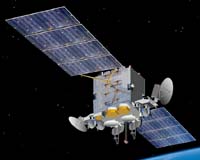
UPI Correspondent Los Angeles (UPI) Nov 28, 2006 The United States military is being urged to take a more deliberate pace in its acquisition of high-priced satellites and other space-based equipment that are a linchpin of the 21st Century fighting force. While the sky literally appears to be the limit when it comes to new uses for satellites, the Government Accountability Office (GOA) said in a report this month that Department of Defense (DOD) space programs were getting ahead of the technology that holds so much promise. The result, the GAO said, has been a tendency by the Pentagon to plunge headlong into new projects before the technologies are mature enough, resulting in a process that has more bumps than expected and budgets that quickly stumble into the red. "Costs for DOD space acquisitions over the past several decades have been consistently underestimated -- sometimes by billions of dollars," the GAO said in the report. "For the most part, this hasn't been caused by poor cost estimating, but rather by the tendency to start programs before knowing whether requirements can be achieved within available resources." The report was compiled at the request of Rep. Terry Everett, R-Ala., the chairman of the House Armed Services Subcommittee on Strategic Forces, who said at a hearing last spring that, "The warfighter's reliance on space operations will continue to grow and the management of our space programs must enable further technology development within the limits of a tightening budget." There is no doubt that space-based technologies, which generally means satellites, has become a keystone of U.S. military operations. The GAO report comes at a time when military space planners are developing a number of ambitiously designed new spacecraft that promises to provide hugely expanded communications capabilities, finely tuned reconnaissance images and the ability to alert a defense system against nuclear ballistic missiles. There is, in fact, so much going on in space that one of the current higher priorities of U.S. Air Force Space Command is securing a better "space surveillance" system so that the military knows just what is orbiting the planet and, more importantly, what those satellites are designed to do. "We have a system that is very good at surveying the heavens, but not as good as you would want it to be as an Air Force officer operating in that domain," Gen. Kevin Chilton, commander of Space Command, said at a recent media briefing in Southern California. "It is more than just knowing where all the dots are in the sky." The briefing, held in conjunction with the annual meeting of the Association of the Air Force in Beverly Hills, touched on several programs, each with its own ambitious goals and sense of urgency as the United States seeks to stay a step ahead in the Global War on Terrorism and the likelihood of nuclear arms proliferating into so-called rogue states. Being able to do more with fewer troops depends a great deal on good battlefield intelligence and robust communications and the ability to share that data around the world in real time if necessary. The Advanced Extremely High Frequency (AEHF) satellite program, for example, will increase the amount of bandwidth available to the military by 10 times what current satellites can handle, Chilton said. "And," he added, "We are always thinking of new ways to use it and push data through those satellites." But the AEHF was one of six space acquisition programs studied by the GAO, which noted that the project's $6.1 billion price tag was about $2 billion over the original estimates, due in no small part to the need to change plans and increase the weight of the AEHS space craft in order to accommodate those mind-boggling data rates that Chilton referred to. The situation is an example of what the GAO found to be the tendency for the Pentagon to plunge feet first into the shark tank of budget allocations where there seems to be a natural tendency to promise the moon at a bargain basement price to address "must-have" priorities. "DOD starts its space programs too early, that is, before it has the assurances that the capabilities it is pursuing can be achieved within available resources and time constraints," the report said flatly. "This tendency is caused largely by the funding process, since acquisition programs attract more dollars than efforts concentrating solely on proving technologies." The GAO recommended that the military increase the transparency of its space acquisition programs to keep a tighter rein on cost estimates, cooperate more closely with outside government cost-estimating agencies, and do more to study previous programs and cooperate with the super-secretive National Reconnaissance Office on satellite technology. The Air Force, to its credit, has concurred and taken steps to tighten-up the estimates of the cost of developing what will be the backbone of U.S. military capabilities for decades to come. "Frankly, I think that we have made great strides in our analysis and rigor and our confidence in our risk assessment of the cost of future programs," Lt. Gen. Michael Hamel, commander of the Air Force Space and Missile Systems Center. "Of course, the proof is in the pudding." Hamel's confidence is reassuring because space payloads are getting ever larger and more complex, and the current world situation makes their presence as a dot in the sky too important to risk moving either too slowly or too quickly.
Source: United Press International Community Email This Article Comment On This Article Related Links Government Accountability Office Military Space News at SpaceWar.com
 Lifting The Darkness On Japan's Next Spy Satellite
 Geelong, Australia (SPX) Nov 27, 2006
At some time in 2007, Japan plans to launch its next spy satellite. In keeping with previous form, almost nothing has been said or revealed about the upcoming launch. It's somewhat ironic that this radar-imaging satellite, which has the capability to see in the dark, is itself surrounded by the darkness of a communications blackout. How much can we see through the veil of secrecy? It's possible to make some educated guesses about Japan's latest intelligence tool. |
|
|

| The content herein, unless otherwise known to be public domain, are Copyright 1995-2006 - SpaceDaily.AFP and UPI Wire Stories are copyright Agence France-Presse and United Press International. ESA PortalReports are copyright European Space Agency. All NASA sourced material is public domain. Additionalcopyrights may apply in whole or part to other bona fide parties. Advertising does not imply endorsement,agreement or approval of any opinions, statements or information provided by SpaceDaily on any Web page published or hosted by SpaceDaily. Privacy Statement |