|
 |
 |
 |
 |
 |
 |
 |
 |

 |
SpaceX Dragon Spacecraft Receives Initial Approval From NASA Safety Review Panel
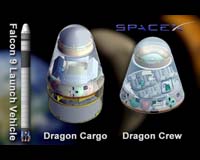
El Segundo CA (SPX) Aug 30, 2007 SpaceX has successfully completed the first of three phases of review required by NASA's Safety Review Panel (SRP) to send its Dragon spacecraft to the International Space Station (ISS). Over a series of meetings spanning four days at NASA's Johnson Space Center in Houston, the team of SpaceX engineers developing the Dragon spacecraft presented their Phase I plans for sending the cargo version of Dragon to the $100 billion dollar orbiting space laboratory. The review covered twenty-three specific hazards, with extra attention paid to the danger of collision -- one of the most difficult hazards to mitigate. The issue of preventing a collision with the ISS was a primary topic of the safety review, and is generally considered one of the more difficult visiting vehicle topics. According to the Safety Review Panel's approval letter, the Phase I collision hazard report for Dragon was approved on the first attempt "To date, no other group has passed the Hazard of Collision report the first time through or completed the overall review in such a short time," said Elon Musk, CEO of SpaceX. "The fact that we passed in under a week speaks well of our team's capabilities." As part of NASA's Commercial Orbital Transportation Services (COTS) competition, SpaceX intends to demonstrate its launch, maneuvering and docking abilities by 2009 -- a year before NASA has scheduled the conclusion of Space Shuttle operations. Community Email This Article Comment On This Article Related Links Launch Pad at Space-Travel.com
 All Set For GSLV-F04 Take-Off On Sept 02; Countdown Starts Today
 Bangalore, India (PTI) Aug 30, 2007
The countdown for the launch of a rocket from Sriharikota, about 100 km from here, carrying India's communication satellite INSAT-4CR, will start today. "The countdown for the launch will start today afternoon," ISRO sources told PTI. The 49-metre tall rocket will be launched at 4.21 p.m. from the Satish Dhawan Space Centre at Sriharikota, they said. |
|
|

| The content herein, unless otherwise known to be public domain, are Copyright 1995-2007 - SpaceDaily.AFP and UPI Wire Stories are copyright Agence France-Presse and United Press International. ESA Portal Reports are copyright European Space Agency. All NASA sourced material is public domain. Additional copyrights may apply in whole or part to other bona fide parties. Advertising does not imply endorsement,agreement or approval of any opinions, statements or information provided by SpaceDaily on any Web page published or hosted by SpaceDaily. Privacy Statement |