|
 |
 |
 |
 |
 |
 |
 |
 |

 |
Space-Age Coating Protecting Against Terrorism
Tyndall AFP - Feb 21, 2003 With the threat of global terrorist action growing daily, the Department of Defense's vital work force and assets must be adequately protected. In response to this threat, engineers at the Air Force Research Laboratory Materials and Manufacturing Directorate developed a method for providing crucial protection -- a polyurethane, elastomer coating for concrete block walls, reinforced concrete, and lightweight, manufactured structures such as trailers. For more than 20 years, DOD has faced the threat of terrorist bombings. During the last 15 years, 80 percent of the department's total deaths were from terrorist activity, said Al Nease, chief of the force protection branch here. "In the past, Air Force engineers thought hardened structures were the best protection against the damaging and deadly effects of an explosion," Nease said. "Hardening a facility could be anything from piling sandbags around a structure's front door to building thick concrete walls with tons of reinforcing steel. And typically, our branch provided 6-inch-thick guidance manuals for engineers who built these bunkers." "Historically, the mindset of civil engineers has been to make buildings stronger so they can withstand a blast," said Dr. Jon Porter, branch senior research engineer. "All that's changing today." Branch engineers have recently developed methods to retrofit existing, conventionally-built structures with spray-on, elastomeric coatings to provide protection from explosions, Porter explained. Using strong, stiff composite materials, the engineers began retrofitting existing structures, but soon discovered they were too stiff and brittle under dynamic loads. "Then we tried various, high-strength fabrics," Porter said. "These materials added strength, improved ductility and could be applied just like wallpaper using an epoxy adhesive." Needing a more affordable, flexible solution than epoxy, though, engineers next investigated a polyurethane elastomer matrix for applying the high-strength fabrics. Blast tests were successful, Porter said. The fourth step was to evaluate the spray-on elastomer without the reinforcement provided by the high-strength fabrics. After completing full-scale explosive testing on concrete block walls and lightweight trailers at Tyndall's test range, plus overseas as part of a joint, international, cooperative program, Porter said tests revealed the elastomeric retrofit was capable of providing adequate protection without any fiber reinforcement. During tests, researchers discovered that elastomeric samples expanded to twice their original length before rupturing. This characteristic allows a retrofitted wall to flex and keeps blast fragments and pieces of a wall from harming people inside. "Our primary concern was that the structure hold up well enough for people to get out safely following an explosion," Porter said. "The elastomer retrofit will do that." The branch's engineering mechanics group looked at 25 commercially-available polymers to determine their range of mechanical properties and selected the best one, Porter said. "Typically used for pickup truck bed liners, municipal water tank liners and commercial food preparation areas, elastomers constitute a large commercial enterprise whose benefits include ready availability plus quickness and ease of application," he said. "When our research is complete, we'll issue a report to explain the concept, techniques and engineering guidance for applying this technology," Porter said. "With this innovative approach, Air Force engineers will help reduce injuries and deaths due to terrorist explosives and better protect American interests at home and abroad." Community Email This Article Comment On This Article Related Links SpaceDaily Search SpaceDaily Subscribe To SpaceDaily Express The Long War - Doctrine and Application
 NGC Team Receives Third Phase Contract For Portable Bio-Warfare Detection Program
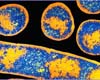 Baltimore MD (SPX) Jan 10, 2006
A Northrop Grumman-led team has been selected by the Defense Advanced Research Projects Agency (DARPA) to continue development of the handheld isothermal silver standard sensor (HISSS), a portable system used for identifying biological-warfare agents, including bacteria, viruses and toxins. |
|
|

| The content herein, unless otherwise known to be public domain, are Copyright 1995-2006 - SpaceDaily.AFP and UPI Wire Stories are copyright Agence France-Presse and United Press International. ESA PortalReports are copyright European Space Agency. All NASA sourced material is public domain. Additionalcopyrights may apply in whole or part to other bona fide parties. Advertising does not imply endorsement,agreement or approval of any opinions, statements or information provided by SpaceDaily on any Web page published or hosted by SpaceDaily. Privacy Statement |