|
 |
 |
 |
 |
 |
 |
 |
 |

 |
Southern Iraq Marshes Show Progress Toward Recovery
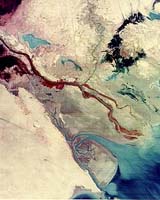
Washington DC (SPX) Jun 06, 2006 Reflooding of Iraq's destroyed Mesopotamian marshes since 2003 has resulted in a "remarkable rate of reestablishment" of native invertebrates, plants, fish, and birds, according to an article in the June issue of BioScience. Curtis J. Richardson of Duke University and Najah A. Hussain of the University of Basrah, writing about fieldwork conducted over the past two years in four large marshes in southern Iraq, note that water inflow from the Tigris and Euphrates rivers has been greater than expected because of record snowpack melts, which has kept salinity levels low. The incoming water quality has been better than predicted, too, with toxin levels lower than had been feared. As a result, many native species have returned, including some rare bird species, although their numbers have not rebounded to historical levels. Iraq's marshes were devastated in the 1980s and 1990s by the Hussein regime's campaign to ditch, dike, drain, and burn them. Unable to pursue their traditional means of livelihood--fishing, herding water buffalo, and hunting--tens of thousands of Marsh Arabs fled to southern Iran. US scientists undertook a first assessment of the status of the marshes in June 2003. They found massive but uncoordinated reflooding--local farmers had begun blowing up dikes and dams after the collapse of the Hussein regime in April 2003--and noted some reestablishment of native plants. Subsequent monitoring, done in collaboration with Iraqi scientists, estimated overall ecosystem health. Richardson and Hussain report that 39 percent of the former extent of the marshes had been reflooded by September 2005. Despite incomplete data, the researchers found that in many respects the restored marshes they studied are functioning at levels close to those in one marsh that remained undrained. The fast recovery of plant production, overall good water quality, and rapid restoration of most wetland functions seem to indicate that the recovery of ecosystem function is well under way. Richardson and Hussain are not complacent about the marshes' future, however. The researchers point out that water inflow is unlikely to be sufficient to maintain the encouraging trends in coming years. Fish catches remain poor, which deters many Marsh Arabs from returning to a traditional way of life. Further research is needed--but is not being done, say Richardson and Hussain--to determine how the marshes and agriculture can share water, to identify sites of toxins, and to study insecticide use by local fishermen. Community Email This Article Comment On This Article Related Links American Institute of Biological Sciences Iraq: The first technology war of the 21st century
 Losing The Shiites
 Washington (UPI) Jun 05, 2006
The latest wave of violence in Iraq seems all too familiar to Americans, but its strategic implications are fresh and disturbing. On Tuesday at least 54 people were killed around the California-sized nation of 28 million people in a new wave of car bomb and mortar attacks. |
|
|

| The content herein, unless otherwise known to be public domain, are Copyright 1995-2006 - SpaceDaily.AFP and UPI Wire Stories are copyright Agence France-Presse and United Press International. ESA PortalReports are copyright European Space Agency. All NASA sourced material is public domain. Additionalcopyrights may apply in whole or part to other bona fide parties. Advertising does not imply endorsement,agreement or approval of any opinions, statements or information provided by SpaceDaily on any Web page published or hosted by SpaceDaily. Privacy Statement |