|
 |
 |
 |
 |
 |
 |
 |
 |

 |
South Pacific Plant May Be Missing Link In Evolution Of Flowering Plants
Boulder CO (SPX) May 18, 2006 A new University of Colorado at Boulder study involving a "living fossil plant" that has survived on Earth for 130 million years suggests its novel reproductive structure may be a "missing link" between flowering plants and their ancestors. The Amborella plant, found in the rain forests of New Caledonia in the South Pacific, has a unique way of forming eggs that may represent a critical link between the remarkably diverse flowering plants, known as angiosperms, and their yet to be identified extinct ancestors, said CU-Boulder Professor William "Ned" Friedman. Angiosperms are thought to have diverged from gymnosperms -- the dominant land plants when dinosaurs reigned in the Cretaceous and Jurassic periods -- roughly 130 million years ago and have become the dominant plants on Earth today. "One of the biggest challenges for evolutionary biologists is understanding how these flowering plants arose on Earth," said Friedman, a professor in CU-Boulder's ecology and evolutionary biology department, whose study appears in the May 18 issue of Nature. "The study shows that the structure that houses the egg in Amborella is different from every other flowering plant known, and may be the potential missing link between flowering plants and their progenitors." In basic terms, Amborella has one extra sterile cell that accompanies the egg cell in the female part of its reproductive apparatus known as the embryo sac, according to the study. The discovery of the unique configuration of the egg apparatus, which is thought to be a relic of intense evolutionary activity in early angiosperm history, "is akin to finding a fossil amphibian with an extra leg," according to a May 18 Nature perspective piece accompanying Friedman's article. The novel embryo sac described in Nature is the first new type of egg-bearing apparatus to be discovered in flowering plants in more than 50 years, according to Friedman. "The unique four-celled egg apparatus in Amborella could represent a critical link between angiosperms and gymnosperms," he wrote in Nature. The study was funded by the National Science Foundation. The origin and evolution of flowering plants has long confounded scientists, he said. Nearly 130 years ago, Charles Darwin, known for developing the theory of natural selection, called the appearance of flowering plants "an abominable mystery." The surprising new finding suggests flowering plants may have arisen on Earth during a time when plant evolution was "particularly flexible," Friedman said. The peculiar egg-forming structure seen in Amborella may eventually link the odd South Pacific shrub to gymnosperms such as conifers, said Friedman. "We associate this structure with a relatively primitive reproductive process," he said. Amborella is a small shrub with tiny greenish-yellow flowers and red fruit that grows only in the understory of New Caledonia rain forests. Amborella plants are unisexual, meaning they will produce either all male or female flowers. Cross-pollination between plants is required for fruit production. Plants used in the study were from both New Caledonia and from specimens cultivated in a CU-Boulder greenhouse. Friedman used a combination of laser, fluorescence and electron microscope techniques during the study. "My research and teaching go hand in hand, and this is the kind of science that goes directly into the classroom," said Friedman, who oversees the work of six CU-Boulder undergraduates and graduate students. "The kinds of discoveries we make in the lab have a profound effect on the material taught in my courses." Community Email This Article Comment On This Article Related Links University of Colorado at Boulder Darwin Today At TerraDaily.com
 Small Molecule Interactions Were Central To The Origin Of Life
 New York NY (SPX) May 17, 2006
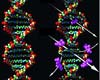
In an important new paper forthcoming in the June issue of The Quarterly Review of Biology, Robert Shapiro (New York University) argues against the widely held theory that the origin of life began with the spontaneous appearance of a large, replicating molecule such as RNA. |
|
|

| The content herein, unless otherwise known to be public domain, are Copyright 1995-2006 - SpaceDaily.AFP and UPI Wire Stories are copyright Agence France-Presse and United Press International. ESA PortalReports are copyright European Space Agency. All NASA sourced material is public domain. Additionalcopyrights may apply in whole or part to other bona fide parties. Advertising does not imply endorsement,agreement or approval of any opinions, statements or information provided by SpaceDaily on any Web page published or hosted by SpaceDaily. Privacy Statement |