|
 |
 |
 |
 |
 |
 |
 |
 |

 |
South Korean President Under Growing Pressure Over Wartime Powers Grab
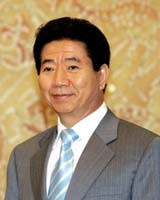
UPI Correspondent Seoul (UPI) Sep 14, 2006 South Korean President Roh Moo-hyun is facing mounting pressure at home to give up his push to regain wartime control of the country's military from the United States. A growing number of people -- from war veterans to scholars, lawyers to former diplomats -- have staged rallies protesting Roh's plan, saying it would jeopardize the security alliance with the United States which has served as the key deterrent against North Korean attack. South Korea voluntarily put operational control of its military under the U.S.-led United Nations Command shortly after the Korean War broke out in 1950. It took back peacetime operational control in 1994, but wartime operational control remains in the hands of the top U.S. commander in Seoul. Roh has pushed for regaining wartime control by 2012 as part of efforts to bolster the country's self-defense posture, which prompted Washington to seek to hand over the right as early as 2009. But critics say it is premature to get back wartime control, as tensions on the Korean peninsula are still running high over the North's nuclear and missile programs. This week, the country's conservative civic groups launched a signature-collecting campaign opposing the plan to hand back operational control of the South Korean troops. "We can only discuss South Korea reclaiming the wartime operational control when North Korea gives up its nuclear program and adopts an open-door policy so that a peace regime is established on the peninsula," the groups said in a statement. The groups said they aim to collect 5 million signatures to block Roh's bid. The campaign comes after a series of protest rallies by anti-communist civic leaders, university professors, lawyers and retired military officers and police chiefs, which has put pressure on Roh's push to regain wartime control. In their unprecedented collective action, some 160 former ambassadors and diplomats issued a joint statement earlier this month to blast Roh's plan, calling for more time to prepare national defense capabilities and build public consensus. In the statement signed by former foreign ministers Gong Ro-myung, Lee Joung-binn and Choi Ho-joong, among others, the retired diplomats said the transfer of wartime operational control should be carried out only when South Korean military capabilities have been upgraded sufficiently to cope with the North's military threats. Roh's government "needs to think long and hard whether it is wise to regain wartime operational control when the balance of military power between the two Koreas has been broken," the statement said. "Only a strong security alliance with the United States can ensure South Korea's national sovereignty." "This is the first collective action by senior diplomats in the South Korean history," said Choi Woon-sang, a former ambassador to India and Egypt and currently a professor of international relations at Seoul's Kyunghee University, who signed the statement. "It means that this issue is crucial enough to determine the fate of the country." The two Koreas remain technically in a state of war, as the 1950-53 Korean War ended with an armistice agreement, not a peace treaty. Their border is the world's last Cold War flashpoint, with nearly 2 million troops on both sides. Fanning the flames of the military control controversy, a group of former South Korean police chiefs held a press conference to express their objections to the transfer of military control. "The (Roh) government is urged to move to build strong ties with the United States, refraining from seeking reconciliation with the North," said the statement issued by 26 former commissioner generals of the National Police Agency and more than 100 retired senior police officials. "Such national agenda should be pushed on the basis of public consensus," said Huh Joon-young, who resigned as the country's police chief last December. Last week, some 700 university professors and lawyers issued a statement against Roh's push, which followed similar actions by former defense ministers, top military brass and religious leaders, among others. According to a recent public survey, over 66 percent of South Koreans polled expressed opposition to the wartime control transfer, while less than 30 percent of respondents supported the plan. More than 71 percent of respondents predicted higher security risks after the transfer, and 80 percent expressed concerns that the transfer would damage the South Korean economy with higher defense costs, according to the joint survey by Gallup Korea and the country's leading Chosun Ilbo newspaper. Analysts say Friday's Seoul-Washington summit will be crucial in the proposed military control transfer and the future of the security alliance between the two countries. Ahead of the summit, a group from South Korea's main opposition Grand National Party staged a sit-in in front of the National Assembly building, calling on Roh to withdraw his transfer plan during the summit with U.S. President George W. Bush.
Source: United Press International Community Email This Article Comment On This Article Related Links Learn about nuclear weapons doctrine and defense at SpaceWar.com Learn about nuclear weapons doctrine and defense at SpaceWar.com Learn about missile defense at SpaceWar.com All about missiles at SpaceWar.com Learn about the Superpowers of the 21st Century at SpaceWar.com
 Fight For Sanctions On Iran Will Be Tough And Take Weeks Says US
 Washington (AFP) Sep 14, 2006
The United States acknowledged Thursday that it will face tough resistance from some of its key allies as it presses for UN sanctions against Iran over its suspect nuclear program. Iran's refusal to comply with UN demands that it suspend uranium enrichment activities some fear could produce nuclear weapons is set to feature high on the agenda when world leaders gather in New York next week for the UN General Assembly. |
|
|

| The content herein, unless otherwise known to be public domain, are Copyright 1995-2006 - SpaceDaily.AFP and UPI Wire Stories are copyright Agence France-Presse and United Press International. ESA PortalReports are copyright European Space Agency. All NASA sourced material is public domain. Additionalcopyrights may apply in whole or part to other bona fide parties. Advertising does not imply endorsement,agreement or approval of any opinions, statements or information provided by SpaceDaily on any Web page published or hosted by SpaceDaily. Privacy Statement |