|
 |
 |
 |
 |
 |
 |
 |
 |

 |
South Africa Looks To The Stars For Growth
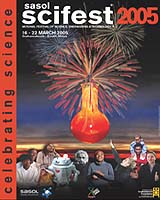
Cape Town, South Africa (SPX) Feb 24, 2005 Foreign investment in astronomy appears set to provide a major boost to South Africa's economy over the next decade, says Deputy Science and Technology Minister Derek Hanekom. Briefing the media at Parliament, he said his department is promoting the country's geographical location and advantages in an effort to attract large international science-based investment. An example of this is the bid South Africa has submitted to become the primary site for the U.S. $ 1,5-billion Square Kilometre Array (SKA) radio telescope. "This - referred to as 'the mother of all telescopes' - will be the largest-single astronomy venture the world has ever seen," he said. A decision on the SKA bid will be taken by its investors, an international consortium, late in 2006. NASA has expressed "serious interest" in building two large-dish antennas in South Africa as part of its Deep Space Array Network (DSAN), Hanekom added. Hanekom said two sites near the Northern Cape towns of Springbok and Upington are being investigated as possible locations. The DSAN is designed to enhance the capabilities of NASA's existing Deep Space Network (DSN), an international network of antennas supporting interplanetary spacecraft missions, as well as radio and radar astronomy observations for the exploration of the solar system and the universe. Currently, the DSN consists of three deep-space communications facilities located about 120' of longitude apart around the world. One is at Goldstone, in California's Mojave Desert; another near Madrid, Spain; and a third near Canberra, Australia. Hanekom said NASA would take a decision "within the next couple of months". Meanwhile two international astronphysicists are getting ready to mingle at South Africa's national festival of science, engineering and technology, which takes place from March 16 to 22 in Grahamstown in the Eastern Cape. "In terms of the diversity of activities, there's nothing like Sasol SciFest anywhere in the world," says Rondebsoch resident Case Rijsdijk, who is a SciFest board member. "There are over 500 events, including a staggering number of hands-on workshops, lots of interactive exhibitions, and speakers who are world leaders in their fields, including Nobel Prize winners. There's something for everyone from preschoolers to their grandparents." Sasol Scifest is considered the biggest science festival on the African continent, with nearly 40,000 visitors streaming in for a week each year. When it began nine years ago, SciFest attracted an almost entirely regional crowd. Now it is a major national event and visitors have come from as far as neighbouring countries such as Namibia, Zimbabwe and Botswana, even though the festival is located slightly off the beaten track in a small university town in a rural region best known for farming pineapples. Scifest was born out of the excitement of South Africa's first democratic elections - and the sobering realisation that bright youngsters saw no future in science, in part because it hadn't been promoted as a career option in the bad old days of segregation known as apartheid. "There was no shop window for science in South Africa," remembers astronomy education specialist Rijsdijk. "SciFest filled that void and has grown from strength to strength." In addition to its public outreach impact, SciFest is also developing an international imprint that opens up dialogue between local and developed-world scientists, who often take the opportunity to meet with their colleagues in South Africa and share ideas. To mark the fact that 2005 is the International Year of Physics, this year SciFest is bringing out a prominent African-American astrophysicist, Professor Gibor Basri of the University of California, a world expert on failed stars, also known as brown dwarfs. In his SciFest talk on Friday, March 18, Basri will be discussing humanity's search for other worlds, particularly those that might resemble Earth. Basri is co-investigator in the NASA Kepler mission that may be able to answer this question within a few years. He will also be debating the next steps in our quest to learn whether we are alone in the galaxy. New York-born Basri has a hectic schedule: he will be speaking to University of Cape Town post-graduate astrophysics students and give a talk at the South African Astronomical Observatory in Observatory on the Monday after his talk in Grahamstown. "South African scientists have been world leaders in niche areas," explains Rijsdijk, who will be running the popular Science Olympics at the festival again this year. "But what we've been lacking are appropriate role models and a person like Gibor Basri can reinforce the perception that South Africans can do it themselves." Exploring the stars is a booming field in South Africa, which has just built SALT (the Southern African Large Telescope) in Sutherland in the Western Cape to take advantage of its ideal geographical position, clear night skies and lack of light pollution. When SALT opens later this year, it will be the largest telescope in the southern hemisphere. As explained above, South Africa is also one of the global bidders for the massive $1.5 billion square kilometre array radio-telescope project. "What SciFest does is highlight local and international role models," suggests Rijsdijk, who is affiliated with the SA Institute of Physics. "And it's working: we are beginning to grow a core of talented black scientists including UCT high-energy physicist Zeblon Vilakazi and astronomer Thebe Medupe - who spoke at last year's festival and showed his documentary, Cosmic Africa." Another guest speaker who, like Gibor Basri, has a keen interest in the universe happens to be a local son made good. Physicist Neil Turok grew up in exile in East Africa after his father was jailed for supporting the then-banned African National Congress. Professor Turok now holds the chair of mathematical physics at Cambridge University in the UK, is a world leader in the field of theoretical cosmology and as a keen surfer, has created the African Institute for Mathematical Sciences just strolling distance from the famous Surfer's Corner beach at Muizenberg in Cape Town. Turok is considered one of the pioneers of the cyclical universe model. In collaboration with a colleague at Princeton University in the USA, Turok argues that the event we think of as the Big Bang ocurred when two complex multi-dimensional structures known as branes clashed into each other - a claim full of complicated mathematics and likely to trigger heated debates whenever astronomers meet. Turok will be giving a SciFest lecture on the search for a complete history of the cosmos on Monday, March 21. On a less theoretical and more practical note, Sivuyile Manxoyi, the science education officer at the South African Astronomical Observatory in Observatory, will be returning to SciFest to again present a popular series of three-a-day workshops making binoculars, luxometers, starfinders, moon phase dials and other gadgets at the Albany History Museum. "Last year I ran 21 workshops on various aspects of astronomy ranging from telescopes to launching water rockets. The partcipants were enthusiastic and had fun," says Manxoyi, who has a Bachelor of Science degree in physics and applied mathematics, a BA in education and is currently completing his MA in education at the University of Cape Town. "There was a six year old boy in one of my workshops last year. Yow! He knew everything about about telescopes and latest developments. He was constantly interrupting my presentation by asking questions so I decided to co-present the session with him. It was fun! A six year old! He was advanced for his age - more so when you consider that his parents were not even involved in science-related fields." Community Email This Article Comment On This Article Related Links Sasol SciFest University of Cape Town African Institute for Mathematical Sciences SKA Radiotelescope Deep Space Network SpaceDaily Search SpaceDaily Subscribe To SpaceDaily Express Space Technology News - Applications and Research
 Industry Team Achieve New Communications Technology With AESA Radars
 Baltimore MD (SPX) Jan 12, 2006
A team comprised of three leading US aerospace and defense contractors has demonstrated an innovative technological use of active electronically scanned array (AESA) radars for high-bandwidth communications. |
|
|

| The content herein, unless otherwise known to be public domain, are Copyright 1995-2006 - SpaceDaily.AFP and UPI Wire Stories are copyright Agence France-Presse and United Press International. ESA PortalReports are copyright European Space Agency. All NASA sourced material is public domain. Additionalcopyrights may apply in whole or part to other bona fide parties. Advertising does not imply endorsement,agreement or approval of any opinions, statements or information provided by SpaceDaily on any Web page published or hosted by SpaceDaily. Privacy Statement |