
 |
 |
 |
 |
 |
 |
 |
 |
 |

 |
Sole Kazakh telecoms satellite fails: space official
Almaty (AFP) June 16, 2008 Kazakhstan's only telecommunications satellite, designed by Russia, has broken down after just two years and may be lost irretrievably, the head of the Kazakh space agency said on Monday. At a news conference in Almaty, space agency chief Talgat Musayev said the satellite, named KazSat, was failing to respond to commands and there was a "very high" chance it could not be recovered. "Control of the satellite was lost on June 8," he said, going on to pour scorn on the poor quality of the satellite, designed by Russian state firm Khrunichev. KazSat was launched in June 2006 in the presence of Kazakh President Nursultan Nazarbayev and his then Russian counterpart, Vladimir Putin. Kazakhstan is host to Russia's main civilian space launch pad at Baikonur and is trying to develop its own space programme with Moscow's help. The Central Asian state is experiencing booming revenues from its vast oil and gas sector. Community Email This Article Comment On This Article Share This Article With Planet Earth
Related Links The latest information about the Commercial Satellite Industry
 MSV Provides Satellite Communications For USA Earthquake Preparedness And Safety
 Reston VA (SPX) Jun 13, 2008
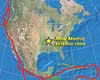
Mobile Satellite Ventures (MSV) has announced that it has joined with the Central United States Earthquake Consortium (CUSEC) to form a new satellite mutual aid radio talkgroup (SMART) dedicated to the preparation for and response to earthquakes throughout the central United States. |
|
|

| The content herein, unless otherwise known to be public domain, are Copyright 1995-2007 - SpaceDaily.AFP and UPI Wire Stories are copyright Agence France-Presse and United Press International. ESA Portal Reports are copyright European Space Agency. All NASA sourced material is public domain. Additional copyrights may apply in whole or part to other bona fide parties. Advertising does not imply endorsement,agreement or approval of any opinions, statements or information provided by SpaceDaily on any Web page published or hosted by SpaceDaily. Privacy Statement |

 del.icio.us
 Digg
Digg Reddit
 YahooMyWeb
 Google
 Facebook