|
 |
 |
 |
 |
 |
 |
 |
 |

 |
Solar Energy Conversion Offers A Solution To Help Mitigate Global Warming
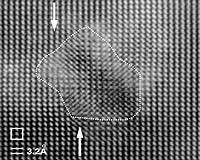
Argonne IL (SPX) Mar 08, 2007 Solar energy has the power to reduce greenhouse gases and provide increased energy efficiency, says a scientist at the U.S. Department of Energy's Argonne National Laboratory, in a report (view it online) published in the March issue of Physics Today. Last month, the Intergovernmental Panel on Climate Change (IPCC) of the United Nations released a report confirming global warming is upon us and attributing the growing threat to the man-made burning of fossil fuels. Opportunities to increase solar energy conversion as an alternative to fossil fuels are addressed in the Physics Today article, co-authored by George Crabtree, senior scientist and director of Argonne's Materials Science Division, and Nathan Lewis, professor of Chemistry at Caltech and director of its Molecular Materials Research Center. Currently, between 80 percent and 85 percent of our energy comes from fossil fuels. However, fossil fuel resources are of finite extent and are distributed unevenly beneath Earth's surface. When fossil fuel is turned into useful energy through combustion, it often produces environmental pollutants that are harmful to human health and greenhouse gases that threaten the global climate. In contrast, solar resources are widely available and have a benign effect on the environment and climate, making it an appealing alternative energy source. "Sunlight is not only the most plentiful energy resource on earth, it is also one of the most versatile, converting readily to electricity, fuel and heat," said Crabtree. "The challenge is to raise its conversion efficiency by factors of five or ten. That requires understanding the fundamental conversion phenomena at the nanoscale. We are just scratching the surface of this rich research field." Argonne carries out forefront basic research on all three solar conversion routes. The laboratory is creating next-generation nanostructured solar cells using sophisticated atomic layer deposition techniques that replace expensive silicon with inexpensive titanium dioxide and chemical dyes. Its artificial photosynthesis program imitates nature using simple chemical components to convert sunlight, water and carbon dioxide directly into fuels like hydrogen, methane and ethanol. Its program on thermoelectric materials takes heat from the sun and converts it directly to electricity. The Physics Today article is based on the conclusions contained in the report of the Basic Energy Sciences Workshop on Solar Energy Utilization sponsored by the U.S. Department of Energy. Crabtree and Lewis served as co-chairs of the workshop and principal editors of the report. The key conclusions of the report identified opportunities for higher solar energy efficiencies in the areas of: Electricity - important research developments lie in the development of new, less expensive materials for solar cells, including organics, thin films, dyes and shuttle ions, and in understanding the dynamics of charge transfer across nanostructured interfaces. Fuel - solar photons can be converted into chemical fuel more resourcefully by breeding or genetically engineering designer plants, connecting natural photosynthetic pathways in novel configurations and using artificial bio-inspired nanoscale systems. Heat - controlling the size, density and distribution of nanodot inclusions during bulk synthesis could enhance thermoelectric performance and achieve more reliable and inexpensive electricity production from the sun's heat. Community Email This Article Comment On This Article Related Links Powering The World in the 21st Century at Energy-Daily.com Our Polluted World and Cleaning It Up China News From SinoDaily.com Global Trade News The Economy All About Solar Energy at SolarDaily.com Civil Nuclear Energy Science, Technology and News All About Solar Energy at SolarDaily.com
 Clyde Space To Supply SOHLA-2 Electrical Systems And Solar Arrays
 Glasgow, UK (SPX) Mar 02, 2007
Astro-Technology SOHLA (Space Oriented Higashiosaka Leading Association) has selected Glasgow based small satellite power specialist, Clyde Space, to supply the complete power system for the SOHLA-2 spacecraft. SOHLA-2 is a 50kg microsatellite and will be the first demonstrator of Panel ExTension SATellite (PETSAT) which was first proposed by the Nakasuka Laboratory of University of Tokyo. |
|
|

| The content herein, unless otherwise known to be public domain, are Copyright 1995-2006 - SpaceDaily.AFP and UPI Wire Stories are copyright Agence France-Presse and United Press International. ESA PortalReports are copyright European Space Agency. All NASA sourced material is public domain. Additionalcopyrights may apply in whole or part to other bona fide parties. Advertising does not imply endorsement,agreement or approval of any opinions, statements or information provided by SpaceDaily on any Web page published or hosted by SpaceDaily. Privacy Statement |