
 |
 |
 |
 |
 |
 |
 |
 |
 |

 |
Solar Eclipse Expedition
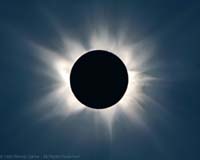
Williamstown MA (SPX) Jul 29, 2008 On Friday, August 1, 2008, the moon will pass in front of the sun, blocking the everyday solar surface. When that happens, it gets a million times darker outside, allowing the faint outer layers of the sun to be seen and studied. Scientists Jay Pasachoff and Bryce Babcock of Williams College are leading an expedition to Siberia so as to station themselves and their equipment in the path of totality (the phase of an eclipse when it is total), which is only hundreds of miles wide in spite of being thousands of miles long. Leaving Williamstown on July 21, they flew 1,750 miles east to Novosibirsk, the third largest city in Russia. Their observing site will be in collaboration with Dr. Allya Nestorenko of the State University of Novosibirsk and Dr. Igor Nestorenko of the Budker Institute of Nuclear Physics. The university is in Akademgorodok, a small, academic town about 20 km east of Novosibirsk. There, scientists from Poland, Australia, and Greece will join them, and their number will swell to 29. During the pre-eclipse week in Akademgorodok, they will be very busy setting up and testing equipment, working in collaboration with Nestorenko. Their experiments deal with the solar corona, especially how it is heated to millions of degrees. The expedition carries twin telescopes with different filters that pass only light from the hot coronal gas along with high-speed digital cameras of a special type. The expedition includes Williams College students Katherine Dupree '10 and Marcus Freeman '10 as well as Keck Northeastern Astronomy Consortium Summer Fellow Matthew Baldwin '10. To provide vital Russian-language translation and liaison services, they will be joined by Williams College Russian history professor William Wagner. Dr. Paul Rosenthal is the expedition medical doctor. Pasachoff is also collaborating with Glenn Schneider of the University of Arizona who will view the eclipse aloft from high above the Arctic. A platform controlled by two gyros will carry several cameras for recording eclipse images. Pasachoff and Schneider previously collaborated on a similar observation over the Antarctic in 2003. Pasachoff is chair of the International Astronomical Union's Working Group on Eclipses. He has viewed 46 previous solar eclipses. Community Email This Article Comment On This Article Share This Article With Planet Earth
Related Links Williams College Solar and Lunar Eclipses at Skynightly
 "Sun-eating dragon" returns to China
 Paris (AFP) July 28, 2008
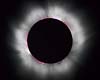
Earth, the Sun and the Moon will align in a celestial ballet on Friday, rewarding China, where the first record of an eclipse was made more than 4,000 years ago, with a dazzling show. |
|
|

| The content herein, unless otherwise known to be public domain, are Copyright 1995-2007 - SpaceDaily.AFP and UPI Wire Stories are copyright Agence France-Presse and United Press International. ESA Portal Reports are copyright European Space Agency. All NASA sourced material is public domain. Additional copyrights may apply in whole or part to other bona fide parties. Advertising does not imply endorsement,agreement or approval of any opinions, statements or information provided by SpaceDaily on any Web page published or hosted by SpaceDaily. Privacy Statement |
 del.icio.us
 Digg
Digg Reddit
 YahooMyWeb
 Google
 Facebook