|
 |
 |
 |
 |
 |
 |
 |
 |

 |
Solar-Powered Blimp Could Fly For A Year
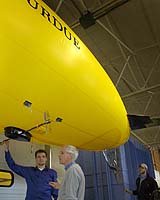
West Lafayette IN (UPI) Mar 21, 2005 U.S. researchers are developing a high-altitude, helium-filled aircraft that could hover over the same spot for up to a year. Researchers at Purdue University said the blimp, which uses solar cells for power, could have applications in surveillance, homeland security, missile defense and weather forecasting. Part of the concept is an aerodynamic design and control system that will help keep the airship steady amid high winds. Computer simulations have shown how the craft would perform given specific design characteristics, they said. "The concept is to have an airship that flies above 65,000 feet and is geostationary, which means it stays in the same position over the Earth," said project leader Oleg Wasynczuk, a professor of electrical and computer engineering. The airship is intended to fly well above commercial aircraft, which cruise as high as 40,000 feet, and conventional blimps, which reach only around 5,000 feet. The researchers said the craft would have better surveillance capabilities than satellites because it would be closer to the ground. It also could hover over one location anywhere in the world, whereas satellites are geostationary only over the equator. Community Email This Article Comment On This Article Related Links Purdue University SpaceDaily Search SpaceDaily Subscribe To SpaceDaily Express UAV News - Suppliers and Technology
 USAF UAV Battlelab Sponsors Demo Of Proxy Aviation's SkyForce
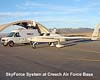 Germantown MD (SPX) Jan 11, 2006
Proxy Aviation Systems recently announced the United States Air Force (USAF) Unmanned Aerial Vehicle Battlelab (UAVB) sponsored and cooperated in a demonstration of SkyForce, Proxy Aviation's unmanned aircraft system. |
|
|

| The content herein, unless otherwise known to be public domain, are Copyright 1995-2006 - SpaceDaily.AFP and UPI Wire Stories are copyright Agence France-Presse and United Press International. ESA PortalReports are copyright European Space Agency. All NASA sourced material is public domain. Additionalcopyrights may apply in whole or part to other bona fide parties. Advertising does not imply endorsement,agreement or approval of any opinions, statements or information provided by SpaceDaily on any Web page published or hosted by SpaceDaily. Privacy Statement |