
Energy News
ENERGY TECH
Soil microbe turns carbon dioxide into acetate using electricity
illustration only

Soil microbe turns carbon dioxide into acetate using electricity

by Simon Mansfield
Sydney, Australia (SPX) Feb 16, 2026
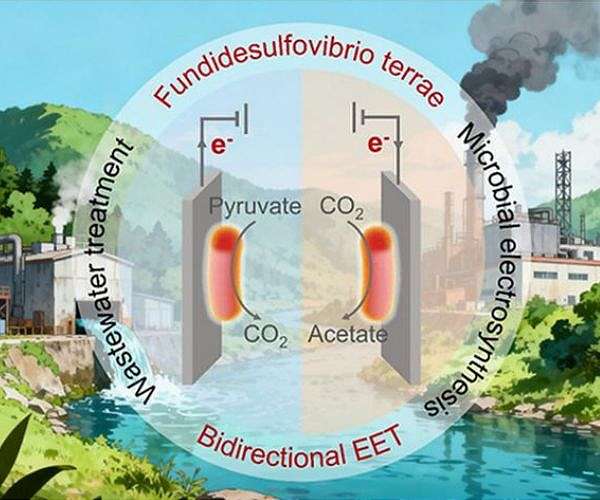
A newly identified soil bacterium could help connect renewable electricity with carbon recycling by turning carbon dioxide into useful chemicals. Researchers report that the sulfate reducing bacterium Fundidesulfovibrio terrae can both send and receive electrical energy while converting carbon dioxide into acetate, an important organic compound used in industry.

The team isolated F. terrae from paddy soil and found that it performs bidirectional extracellular electron transfer, moving electrons across the cell boundary in both directions. While most organisms rely on internal chemical reactions for energy, some microbes interact electrically with their surroundings, exchanging electrons with minerals or electrodes to survive in oxygen limited conditions and influence large scale biogeochemical cycles.

In controlled laboratory systems, F. terrae directly transferred electrons to iron bearing minerals, reducing iron compounds without the need for soluble chemical shuttles. The bacterium reached iron reduction efficiencies above sixty percent, indicating a flexible respiratory metabolism that can adapt to different electron acceptors. Electrochemical measurements showed that the microbe donates electrons to solid electrodes and also accepts electrons from them, forming stable biofilms that maintain long term electrical contact with surfaces.

The study highlights that this microorganism can tap electrical energy and direct it into carbon metabolism. According to the authors, its metabolic flexibility suggests a biological platform for coupling renewable electricity with carbon capture and conversion. The work points to a microbial strategy that may be harnessed in devices designed to turn waste carbon into valuable products.

The researchers observed that F. terrae uses electricity to power carbon fixation when supplied with electrons from an electrode and carbon dioxide as the only carbon source. Under these conditions, the bacterium converted carbon dioxide into acetate through the Wood Ljungdahl pathway, a highly efficient microbial route for carbon fixation. The experimental system produced acetate at concentrations above 11 millimolar, demonstrating effective storage of electrical energy in chemical form.

Genomic and biochemical analyses indicate that c type cytochromes help mediate the electrical interactions by acting as molecular conduits for electron transfer across the cell envelope. The bacterium also appears to employ conductive pili that act like microscopic wires, improving electron flow between cells and external materials such as minerals or electrodes. These structures support the formation of electroactive biofilms that can participate in long range electron transfer.

The discovery broadens current understanding of sulfate reducing bacteria, which are already known for their roles in sulfur cycling, metal corrosion, and environmental cleanup. Only a small set of microbes had previously been recognized as capable of fully bidirectional extracellular electron transfer. The newly described mechanism suggests that sulfate reducing bacteria may have more extensive roles in natural redox processes and engineered bioelectrochemical systems than previously thought.

Microbial electrosynthesis technologies use microorganisms to convert electricity and carbon dioxide into fuels or platform chemicals and are drawing attention as tools for lowering greenhouse gas emissions. By demonstrating efficient acetate production driven directly by electrical energy, F. terrae offers a new biological resource for building cleaner chemical manufacturing systems. Its abilities could support reactors that run on renewable power while capturing and transforming carbon.

The authors note that further work is needed to improve performance, evaluate stability over long operating periods, and clarify how electroactive microbes behave in complex natural and engineered environments. Even so, the study underlines the potential of electroactive microorganisms as living bridges that link renewable energy systems with carbon recycling processes. As efforts to limit climate change intensify, such approaches may contribute to technologies that turn waste carbon into feedstocks for a low carbon economy.

Research Report: Bidirectional extracellular electron transfer and electroautotrophic metabolism in Fundidesulfovibrio terrae

Related Links
Shenyang Agricultural University
Powering The World in the 21st Century at Energy-Daily.com

Subscribe Free To Our Daily Newsletters
Tweet

RELATED CONTENT
The following news reports may link to other Space Media Network websites.
ENERGY TECH
UCSB scientists bottle the sun with liquid battery
Santa Barbara, CA (SPX) Feb 16, 2026
When the sun goes down, solar panels stop working. This is the fundamental hurdle of renewable energy: how to save the sun's power for a rainy day - or a cold night. Chemists at UC Santa Barbara have developed a solution that does not require bulky batteries or electrical grids. In a paper published in the journal Science, Associate Professor Grace Han and her team detail a new material that captures sunlight, stores it within chemical bonds and releases it as heat on demand. The material, a modif ... read more

ENERGY TECH
Environmental groups sue Trump administration over scrapped climate rule

'Hard to survive': Kyiv's elderly shiver after Russian attacks on power and heat

Zelensky seeks more air defence as Russia plunges Kyiv into cold

US to repeal the basis for its climate rules: What to know

ENERGY TECH
US labs map liquid metal path to future fusion power plants

Deep learning model tracks EV battery health with high precision

Simulations reveal how plasma flow steers fusion reactor exhaust

UCSB scientists bottle the sun with liquid battery

ENERGY TECH
China added record wind and solar power in 2025, data shows

UK nets record offshore wind supply in renewables push

Trump gets wrong country, wrong bird in windmill rant

ENERGY TECH
Golden bridge tunnel junction design boosts all perovskite tandem solar cell efficiency

Study maps path to cleaner terawatt scale solar manufacturing

Next generation solar manufacturing pathway could avoid massive CO2 output

Hydrogen bond design advances solar water oxidation efficiency

ENERGY TECH
INL and NVIDIA align AI platform to speed advanced nuclear rollout

GENUSA to supply GNF2 reload fuel for Vattenfall Forsmark plant

INL launches molten salt examination hub for next gen reactors

Microbes join forces to quickly clean up uranium pollution

ENERGY TECH
Neem seed biochar turns waste into thermal energy storage medium

Salt solvent unlocks lignin for next generation biofuel plants

Pilot plant in Mannheim delivers tailored climate friendly fuel blends

Garden and farm waste targeted as feedstock for new bioplastics

ENERGY TECH
US forces board ship in Indian Ocean that fled Caribbean blockade: Pentagon

US renews threat to leave IEA

Oil in spotlight as Trump's Iran warning rattles sleepy markets

Brazil eyes fossil fuel roadmap 'that unites'

ENERGY TECH
ECB fines French bank for climate risk failures

'Climate cult' hurts Europe's economy, US energy secretary tells AFP

Warming drives growth of Arctic peatlands

Antarctic ice feedback limits Southern Ocean carbon sink

Subscribe Free To Our Daily Newsletters


The content herein, unless otherwise known to be public domain, are Copyright 1995-2026 - Space Media Network. All websites are published in Australia and are solely subject to Australian law and governed by Fair Use principals for news reporting and research purposes. AFP, UPI and IANS news wire stories are copyright Agence France-Presse, United Press International and Indo-Asia News Service. ESA news reports are copyright European Space Agency. All NASA sourced material is public domain. Additional copyrights may apply in whole or part to other bona fide parties. All articles labeled "by Staff Writers" include reports supplied to Space Media Network by industry news wires, PR agencies, corporate press officers and the like. Such articles are individually curated and edited by Space Media Network staff on the basis of the report's information value to our industry and professional readership. Advertising does not imply endorsement, agreement or approval of any opinions, statements or information provided by Space Media Network on any Web page published or hosted by Space Media Network. General Data Protection Regulation (GDPR) Statement Our advertisers use various cookies and the like to deliver the best ad banner available at one time. All network advertising suppliers have GDPR policies (Legitimate Interest) that conform with EU regulations for data collection. By using our websites you consent to cookie based advertising. If you do not agree with this then you must stop using the websites from May 25, 2018. Privacy Statement. Additional information can be found here at About Us.