
 |
 |
 |
 |
 |
 |
 |
 |
 |

 |
Software Gets Space Smart
Washington - August 5, 1999 - A program that enables spacecraft to operate themselves and another that predicts material science failures have been chosen as NASA's Software of the Year winners. The award winners are: Remote Agent, which has been used to control NASA's Deep Space 1 mission, and Genoa, a failure-analysis software with unique predictive capabilities. Remote Agent, is a giant leap in the world of artificial intelligence. It is the first software package ever used to autonomously control a spacecraft: Deep Space 1. NASA scientists say the Remote Agent artificial intelligence used on NASA's Deep Space 1 is the precursor for self-aware, self-controlled and self-operated robots, exploring rovers and intelligent machines. Over three days last May, Remote Agent controlled Deep Space 1, a feat previously accomplished only in science fiction. The software package took command of Deep Space 1 during a flight experiment, and the artificial intelligence more than met expectations. The software detected, diagnosed and fixed problems, showing that it can make decisions to keep a mission on track. "This technology will allow us to pursue Solar System exploration missions that only a few years ago would have been considered too elaborate, too costly or too dependent on teams of Earth-bound controllers," said Dr. Doug Bernard, Remote Agent manager at NASA's Jet Propulsion Laboratory, Pasadena, CA. "The Remote Agent approach to spacecraft autonomy signals the dawn of a new era in space exploration," said Dr. Pandu Nayak, deputy manager of Remote Agent development the NASA Ames Research Center, Moffett Field, CA. "Remote Agent will enable new classes of missions and more effective use of existing resources, and it will enable today's ground operations teams to operate significantly more missions." Remote Agent and its components are already being considered for a variety of NASA missions, he said. Experts from JPL and Ames pooled their expertise to conduct the Remote Agent experiment, designed to push the limits of spacecraft autonomy. Their efforts proved that this sophisticated artificial intelligence software is capable of commanding the spacecraft with "high-level" goals, such as "communicate with the Earth on the agreed-upon schedule" or "fire the main engine as needed to stay on the desired trajectory." To demonstrate Remote Agent's versatility, the tests threw unique challenges in the software's path: scientists created four simulated failures designed to test Remote Agent's abilities. During one of the simulated failures, the spacecraft's camera appeared to be stuck in the "on" position. In response, Remote Agent formulated and executed a new plan that accounted for the fact that the camera could not be turned off, thus impacting total spacecraft power availability. Genoa simulates and predicts aging and failure in all sorts of structural materials, including high-tech alloys and ceramics used in airplanes, cars, engines and bridges. Genoa was submitted by the NASA Glenn Research Center at Lewis Field in Cleveland, OH. The development of Genoa began at the center in the 1970s and was commercialized only about a year ago. A minority-owned small business is now marketing the software, which is used by aircraft manufacturers and others. It is the only software that can predict progressive aging and failure of materials as diverse as metals, ceramics, concrete and all types of composites. The ability to predict material and structural failure helps manufacturers build stronger aircraft fuselages, engines, car bodies, and bridges. This is especially important today as commercial aircraft fleets age and many elements of road and bridge infrastructure reach the end of their useful lives. The NASA award is the largest award for software excellence in the United States. The winners were selected from 50 entries representing more than 150 corporations, universities, and government laboratories. Last year, NASA awarded over $350,000 in cash prizes to the winners. The event is sponsored by the NASA Inventions and Contributions Board and the NASA Chief Information Officer.
Email This Article Comment On This Article Related Links Space
 Satellite Launch To Boost DTH In India
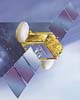 Calcutta, India (SPX) Dec 28, 2005
The successful launch Thursday of India's heaviest satellite from spaceport of Kourou in French Guyana may have boosted the country's space research efforts to yet another level, but it has also lifted the spirits of at least three Direct-To-Home televisions broadcasters, one of which has been waiting for years to launch its services in India. |
|
|

|
|
|
|
|
|
|
|
|
|
|
|
| The content herein, unless otherwise known to be public domain, are Copyright 1995-2006 - SpaceDaily.AFP and UPI Wire Stories are copyright Agence France-Presse and United Press International. ESA PortalReports are copyright European Space Agency. All NASA sourced material is public domain. Additionalcopyrights may apply in whole or part to other bona fide parties. Advertising does not imply endorsement,agreement or approval of any opinions, statements or information provided by SpaceDaily on any Web page published or hosted by SpaceDaily. Privacy Statement |

