|
 |
 |
 |
 |
 |
 |
 |
 |

 |
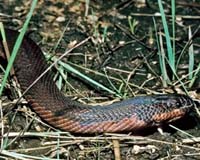
Snakes Credited For Our Keen Vision
UPI Correspondent Davis CA (UPI) Aug 30, 2006 A University of California anthropologist says humans need to thank the snake for helping them develop their vision to see inches away. Lynne Isbell at the UC-Davis campus says the ability of humans to have such sharp eyesight resulted from a "biological arms race" millions of years ago between primates and snakes, especially the poisonous kind, reports ABC News. The primates eventually won the battle and their revulsion against the reptiles continues among their human descendants. Isbell's study appears in the Journal of Human Evolution. Scientists believe primates developed near-vision to capture bugs or pluck a fruit. Isbell says monkeys and apes of Africa needed to improve their vision to protect themselves from being consumed by snakes lurking nearby as the latter are harmless from a distance. Isbell says African primates, who have had to battle snakes the longest, have the keenest vision. At the other end, the Lemurs of Madagascar, who have never been preyed on by venomous snakes, have the poorest vision. "Primates have the best vision of all mammals," she says. "And we have the best vision of all primates."
Source: United Press International Community Email This Article Comment On This Article Related Links University of California - Davis All About Human Beings and How We Got To Be Here
 Ancient Raptors Likely Feasted On Early Man
 Columbus OH (SPX) Aug 31, 2006
A new study suggests that prehistoric birds of prey made meals out of some of our earliest human ancestors. Researchers drew this conclusion after studying more than 600 bones from modern-day monkeys. They had collected the bones from beneath the nests of African crowned eagles in the Ivory Coast's Tai rainforest. |
|
|

| The content herein, unless otherwise known to be public domain, are Copyright 1995-2006 - SpaceDaily.AFP and UPI Wire Stories are copyright Agence France-Presse and United Press International. ESA PortalReports are copyright European Space Agency. All NASA sourced material is public domain. Additionalcopyrights may apply in whole or part to other bona fide parties. Advertising does not imply endorsement,agreement or approval of any opinions, statements or information provided by SpaceDaily on any Web page published or hosted by SpaceDaily. Privacy Statement |