
 |
 |
 |
 |
 |
 |
 |
 |
 |

 |
Smoke Inhibits Rainfall
Washington - October 5, 1999 - Smoke from forest fires has, for the first time, been proven to inhibit rainfall, according to an extensive analysis of data taken from NASA's Tropical Rainfall Measuring Mission (TRMM) spacecraft. The TRMM data, published in the Oct. 15th issue of Geophysical Research Letters, shows that the warm rain processes in tropical clouds, polluted with heavy smoke from forest fires, are practically shut off. In clouds that have been "contaminated" with smoke, scientists found that the clouds tops must grow considerably above the freezing level (16,000 feet or 4.8 kilometers) in order for the clouds to start producing rain by the alternative mechanism of ice. In the typical rainfall process in cleaner air, rain can form in significantly smaller clouds without ice. Raindrops in the atmosphere can grow by two means. The first is by coalescence or "collision." In this process, the warm rain process, a few cloud drops get large enough to start falling. As they fall, they pick up the other clouds drops until they become big enough to fall to Earth as rain drops. The second way needs ice particles and supercooled water (water colder than 32 deg. F). Ice particles surrounded by supercooled water may grow extremely rapidly as water freezes onto the ice core. These large ice particles fall and eventually melt and become raindrops as they fall towards the warmer surface. Scientists have known for some time that smoke from burning vegetation suppresses rainfall, but it was not known to what extent until now. Because of TRMM, scientists are able to observe both precipitation and cloud droplets over large areas, including clouds in and out of smoke plumes. "We've seen evidence of decreased precipitation in clouds contaminated by smoke, but it wasn't until now that we had direct evidence showing that smoke actually suppresses precipitation completely from certain clouds," said Dr. Daniel Rosenfeld, TRMM science team member and the author of the paper, TRMM Observed First Direct Evidence of Smoke from Forest Fires Inhibiting Rainfall" the research paper in which this information was published. Scientists have a keen interest in the changes in global precipitation not only because of its impact on human activities, such as crop production, but also because of its role in deriving the global rainfall weather pattern. Tropical rainfall is responsible for about two-thirds of the energy required to power the global atmospheric circulation. The recent El Nino serves as a perfect example of the atmospheric circulation changes that can result from a displacement of the normal precipitation patterns in the central Pacific. Similarly, the modification of precipitation by aerosols (particles of liquid or solid dispersed as a suspension in gas, such as air) might also affect the global climate. More precise information about this rainfall and its variability is crucial to understanding and predicting global climate and climate change. In the paper, Rosenfeld highlights one specific area -- Kalimantan, Indonesia. During a TRMM overpass on March 1, 1998, the southeastern portion of the Island was engulfed heavily by smoke while the northwestern portion was relatively smoke free. The TRMM radar detected precipitation in smoke-free clouds while almost none in the smoke-plagued clouds, thus showing the impact of smoke from fires on the rain forest rainfall processes. "It's important to note that this is not a unique case," said Rosenfeld of the Hebrew University of Jerusalem, the Institute of Earth Sciences, Israel. "We observed and documented several other cases that showed similar behavior. In some instances even less severe smoke concentration was found to have comparable impacts on clouds." This research further validates earlier studies by Rosenfeld on urban air pollution showing that pollution in Manila in the Philippines has an effect similar to forest fires, according to Rosenfeld. "Findings such as these are making the first inroads into the difficult problem of understanding humankind's impacts on the global precipitation process," said Dr. Christian Kummerow, TRMM project scientist at NASA's Goddard Space Flight Center, Greenbelt, MD. The Tropical Rainfall Measuring Mission (TRMM) carries microwave and visible/infrared sensors, and a spaceborne rain radar -- the first rain radar ever launched into space. The three primary instruments used for this research were the TRMM Precipitation Radar, the TRMM Microwave Imager, and the Visible and Infrared Sensor. TRMM is NASA's first mission dedicated to observing and understanding tropical rainfall and how it affects the global climate. The TRMM spacecraft fills an enormous void in the ability to calculate world-wide precipitation because so little of the planet is covered by ground-based radars. Presently, only two percent of the area covered by TRMM is covered by ground-based radars, Kummerow said. TRMM is a joint U.S.-Japanese mission that was launched on Nov. 27, 1997, from the National Space Development Agency at Japan's Tanegashima Space Center. The TRMM satellite has produced continuous data since Dec. 8, 1997. Tropical rainfall -- that which falls within 35 degrees north and 35 degrees south of the equator -- comprises more than two-thirds of the rainfall on Earth. TRMM is part of NASA's Earth Science Enterprise, a long-term research program designed to study the Earth's land, oceans, air, ice and life as a total system.
Earth News at SpaceDaily
Email This Article Comment On This Article Related Links Space
 Satellite Launch To Boost DTH In India
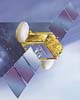 Calcutta, India (SPX) Dec 28, 2005
The successful launch Thursday of India's heaviest satellite from spaceport of Kourou in French Guyana may have boosted the country's space research efforts to yet another level, but it has also lifted the spirits of at least three Direct-To-Home televisions broadcasters, one of which has been waiting for years to launch its services in India. |
|
|

|
|
|
|
|
|
|
|
|
|
|
|
| The content herein, unless otherwise known to be public domain, are Copyright 1995-2006 - SpaceDaily.AFP and UPI Wire Stories are copyright Agence France-Presse and United Press International. ESA PortalReports are copyright European Space Agency. All NASA sourced material is public domain. Additionalcopyrights may apply in whole or part to other bona fide parties. Advertising does not imply endorsement,agreement or approval of any opinions, statements or information provided by SpaceDaily on any Web page published or hosted by SpaceDaily. Privacy Statement |

