|
 |
 |
 |
 |
 |
 |
 |
 |

 |
Smart Catalysts Detects, Traps And Deactivates Airborne Bugs
St Louis - Mar 10, 2004 An environmental engineer at Washington University in St. Louis with his doctoral student has patented a device for trapping and deactivating microbial particles. The work is promising in the war on terrorism for deactivating airborne bioagents and bioweapons such as the smallpox virus, anthrax and ricin, and also in routine indoor air ventilation applications such as in buildings and aircraft cabins. Pratim Biswas, Ph.D.,Stifel & Quinette Jens Professor of Environmental Engineering Sciences and director of Environmental Engineering Sciences at Washington University, combines an electrical field with soft X-rays and smart catalysts to capture and destroy bioagents such as the smallpox virus. "When the aerosol particles come into the device they are charged and trapped in an electrical field," Biswas explained. "Any organic material is oxidized, so it completely deactivates the organism." Biswas noted that conventional corona systems do not charge and effectively trap nanometer-sized particles, such as viruses. But his invention combines soft x-rays with a conventional corona that has been proven to be very effective at charging and trapping particles in a range of sizes. On the walls of the device, Biswas has coated nanoparticles that catalyze the oxidation. These nanoparticles are "smart" objects that are turned "on" and "off" by irradiation. "This smart catalyst is unique," Biswas said. "If we should encounter some organism that is very difficult to degrade, I can engineer my smart catalysts to function so that they will oxidize those molecules." Biswas and his collaborators have tested the device using non-potent polio virus and have achieved 99.9999 percent efficiency. He currently is collaborating with the Midwest Regional Center of Excellence for Biodefense and Emerging Infectious Diseases Research (MRCE) and his Washington University colleague, Lars Angenent, to identify the mechanistic pathways of biomolecular degradation. Washington University in St. Louis has a core group of six faculty who are mainstream aerosol researchers, and work on different aspects related to Aerosol Science and Engineering. This nationally and internationally recognized group of scientists, one of the largest groups in U. S. universities, studies the synthesis and environmental impact of nanoparticles, atmospheric pollution at the regional and global scales, and develops the next generation of instrumentation for detection of these particles, as well as several environmental nanotechnology applications. Biswas was part of a special colloquium, "Research in Aerosols and Air Quality," held March 2, 2004, at Washington University. The event was organized under the university's Sesquicentennial Environmental Initiative wherein world-renowned researchers reported the latest findings in the aerosol engineering field. The colloquium, was part of a series of environmental dialogues held in honor of Washington University's 150th anniversary. Community Email This Article Comment On This Article Related Links Washington University in St. Louis SpaceDaily Search SpaceDaily Subscribe To SpaceDaily Express Dirt, rocks and all the stuff we stand on firmly
 Magnetic Reconnection Region Larger Than 2.5 Million Km Found In The Solar Wind
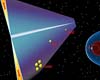 Paris (ESA) Jan 12, 2006
Using the ESA Cluster spacecraft and the NASA Wind and ACE satellites, a team of American and European scientists have discovered the largest jets of particles created between the Earth and the Sun by magnetic reconnection. This result makes the cover of this week's issue of Nature. |
|
|

| The content herein, unless otherwise known to be public domain, are Copyright 1995-2006 - SpaceDaily.AFP and UPI Wire Stories are copyright Agence France-Presse and United Press International. ESA PortalReports are copyright European Space Agency. All NASA sourced material is public domain. Additionalcopyrights may apply in whole or part to other bona fide parties. Advertising does not imply endorsement,agreement or approval of any opinions, statements or information provided by SpaceDaily on any Web page published or hosted by SpaceDaily. Privacy Statement |