|
 |
 |
 |
 |
 |
 |
 |
 |

 |
Sinovac Biotech Conducts World's First Human Clinical Testing Of Sars Vaccine
Beijing (SPX) Jun 21, 2004 Sinovac Biotech Ltd. ("Sinovac") is pleased to announce that its Beijing-based operating subsidiary, Sinovac Biotech Co., Ltd. (also known in China as Beijing Kexing Bioproducts) has commenced Phase I human clinical trials of its SARS vaccine. The first subjects were injected with the vaccine on Saturday the 22nd of May 2004, at the China-Japan Friendship Hospital in Beijing, China. The four volunteers, three healthy male students and a female student, were injected with either the SARS vaccine or a placebo. No abnormal reaction was observed during the two-hour observation period after inoculation, and the volunteers left the hospital. Dr. Wei Dong Yin, president of Sinovac, updated on Sunday that the four volunteers are in excellent health after the first day of the SARS vaccine clinical testing. The clinical trial commencement was attended by several high-ranking representatives of the Chinese government, including: Mr. Guanhua XU, the Minister of Science and Technology of China and Mr. Xiaoyu ZHENG, the Director General of the Chinese FDA (SFDA). Sinovac is the only company in China, and indeed the world, to have been approved to conduct human clinical trials of a SARS vaccine.
Clinical Trial Design There are 36 healthy volunteers aged from 21 to 40 that were selected for clinical testing, who are divided into four groups. Twenty-four subjects (two groups of 12) will get the vaccine, and the twelve others (two groups of 6) will get the placebo. Each subject will get two shots. The first shot is on day 0 followed by 28-day observation of the subject. The second shot will be given after the initial 28 day period and the subject will be observed until day 210, the phase I trial end-date. The volunteers will be observed for reaction every day for the first three days, and then less frequently throughout the whole 210-day observation process. Neither the volunteers nor the administering doctors were informed of whether the injection was a vaccine or a placebo. The 4 above-mentioned volunteers are the first to have been inoculated out of the group of 36 subjects.
Regulatory Approval Process The drug approval process regulated by the State Drug Administration (SFDA) in China is similar to the one regulated by the FDA in the United States. The process involves pre-clinical in vitro laboratory and in vivo animal testing; IND study (Investigational New Drug); human clinical Phases I, II and III; New Drug Application; and finally Marketing Approval for sale. The SFDA has stated that it is fast-tracking the drug approval process for Sinovac�s potential SARS vaccine. As previously announced, pre-clinical trials on Rhesus monkeys showed Sinovac�s vaccine was effective in preventing infection. The monkeys that were inoculated with the vaccine experienced no serious side effects after they were exposed to the potentially deadly virus. Immune response was invoked by the vaccine in all animal models. No immune enhancement was observed in any of the pre-clinical testing. Sinovac was approved to commence Phase I clinical trials on the 19th January 2004. Since that time, Sinovac has been fulfilling the requirements for the actual commencement of the clinical trial. First of all, the specific vaccine to be used in the trial was manufactured. Then, this vaccine and the placebo were submitted to the National Institute for the Control of Pharmaceutical and Biological Products (NICPBP) for testing. The testing reports were received on April 21st and 23rd of 2004 and the vaccine was proven to be eligible for use in the trial by the NICPBP. Sinovac then coordinated its clinical efforts by setting up an Ethics Committee for the trial. Finally, the screening of the clinical subjects selected for the trial was carried out. The SFDA approved the commencement of the Phase I clinical trial and will be monitoring the trial for its duration. Clinical protocols for the testing of Sinovac�s potential SARS vaccine have been developed in accordance with stringent newly established worldwide protocols for the conduct of SARS vaccine clinical trials. The protocols were also developed with the cooperation of the Chinese FDA (SFDA), China CDC, and the China Medical Academic College. The ultimate aim of the vaccine will be to provoke the body's immune system into action, so that it can destroy the SARS virus if infected. The first phase of human testing will determine if the vaccine is safe for the human body. Risks do exist but, if any, they are anticipated to be only minor, such as low fever and pain. During and after the Phase I trial, analysis will be conducted. The summary report will be sent to the SFDA for its review and if the vaccine receives SFDA approval, then it will proceed into Phase II clinical trials. A second phase of clinical testing would have more participants from a wider demographic range. During the Phase I clinical trial, Sinovac will provide continuous updates on the status of the trial and the health condition of the volunteers. Community Email This Article Comment On This Article Related Links Sinovac SpaceDaily Search SpaceDaily Subscribe To SpaceDaily Express Space Medicine Technology and Systems
 Genomic Sequences Processed In Minutes, Rather Than Weeks
 Richland WA (SPX) Jun 22, 2005
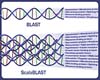
A new computational tool developed at the Department of Energy's Pacific Northwest National Laboratory is speeding up our understanding of the machinery of life - bringing us one step closer to curing diseases, finding safer ways to clean the environment and protecting the country against biological threats. |
|
|

| The content herein, unless otherwise known to be public domain, are Copyright 1995-2006 - SpaceDaily.AFP and UPI Wire Stories are copyright Agence France-Presse and United Press International. ESA PortalReports are copyright European Space Agency. All NASA sourced material is public domain. Additionalcopyrights may apply in whole or part to other bona fide parties. Advertising does not imply endorsement,agreement or approval of any opinions, statements or information provided by SpaceDaily on any Web page published or hosted by SpaceDaily. Privacy Statement |