|
 |
 |
 |
 |
 |
 |
 |
 |

 |
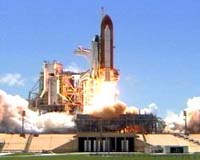
Shuttle Performs Perfect Fourth Of July Liftoff
SpaceDaily US Editor Washington DC (SPX) Jul 04, 2006 Space shuttle Discovery delivered a flawless liftoff Tuesday afternoon, ending weeks of worry and uncertainty, and lending a heightened celebratory note to the July Fourth holiday in the United States. The spacecraft took off exactly on time at 2:38 p.m. Eastern Time from Launch Pad 39B at Kennedy Space Center in Florida, in a launch viewed in unprecedented detail by a new slew of cameras installed by NASA. Cameras tracked multiple angles of the launch, including aboard the shuttle's huge external fuel tank during its climb into space, and about 10 minutes after liftoff, shuttle pilot Mark Kelly maneuvered Discovery to aim new cameras aboard the orbiter at the fuel tank to check for further damage to its foam insulation. Discovery's launch took place despite the disclosure that NASA engineers on Sunday night had found a five-inch crack in the insulation and a three-inch triangular piece of foam that had broken off and fallen onto the launch platform. Engineers studied both items and determined that they posed no significant risk to either the safety of the crew or the success of the launch. Better weather also played a factor in Tuesday's liftoff. After NASA had canceled two previous attempts because of lightning-laden clouds lurking in the vicinity of the launch site, only gentle offshore rains greeted controllers. Those showers dissipated as expected and were replaced by skies containing light cloudiness and plenty of sun at launch time. Discovery is transporting seven astronauts - six Americans and one European - to a rendezvous with the International Space Station on Thursday. Their successful mission is considered crucial to the resumption of both station construction and the U.S. presence in space. The flight constitutes only the second shuttle mission since Columbia disintegrated over Texas on Feb. 1, 2003. That disaster occurred because a 1.5 pound piece of foam broke off the main fuel tank. Traveling at more than 500 miles (800 kilometers) per hour, the fragment punched a large hole in the leading edge of the shuttle's left wing. Throughout Columbia's two-week mission to the space station, neither NASA nor the crew became aware of the fatal flaw that had developed in the orbiter. The accident took the lives of all seven crew members. NASA since has immortalized them by naming seven hills in the Gusev crater area of Mars - where the Spirit rover continues to operate - and seven craters on the Moon's far side, in their honor. Bill Gerstenmaier, NASA's associate administrator for space operations, said there were no disagreements about whether to proceed with Discovery's launch on Tuesday. Speaking with reporters, he said the piece of foam that had broken off contained less than half of the mass deemed potentially hazardous to the orbiter. In addition, he said engineers also decided the crack in the insulation posed no danger because the remaining foam was structurally sound. "We see no concern with proceeding in that condition," Gerstenmaier said. Nevertheless, foam issues have dogged NASA ever since the Columbia disaster. Despite intensive efforts to stabilize the crucial insulating material, a one-pound piece broke off during Discovery's launch in July 2005. That piece of debris missed the shuttle, but NASA Administrator Michael Griffin grounded the fleet once again until the problem could be studied even further. He withdrew the grounding order this past spring, after engineers made more improvements to the foam configuration. Griffin's decision was met with opposition from at least two NASA officials - chief safety officer Bryan O'Connor and chief engineer Chris Scolese - who urged further delay in resuming shuttle launches. A third official, Charlie Camarda, who had been director of engineering at the Johnson Space Center in Houston, Texas, resigned last week over the foam controversy. NASA has instituted several safety contingencies to protect the lives of the astronauts if another potentially catastrophic foam incident occurs. For example, the Discovery crew could remain aboard the space station until a shuttle rescue mission could be launched. The expanded camera coverage constitutes an additional safety measure. Along with the cameras watching the shuttle and fuel tank during liftoff, others aboard the space station will inspect Discovery after its rendezvous. Discovery will carry 2.5 tons of supplies to the ISS, as well as the Italian-built Leonardo science module. Two members of the crew, Mike Fossum and Piers Sellers, are scheduled to undertake at least two spacewalks. ESA astronaut Thomas Reiter will remain aboard the station and serve as the third crew member. The remaining Discovery crew includes the commander, Steven Lindsey, and mission specialists Lisa Nowak and Stephanie Wilson. CommunityEmail This Article Comment On This Article Related Links Shuttle at NASA Space Shuttle News at Space-Travel.Com
 Up To Six Pieces Of Debris Fell Off Discovery Says NASA
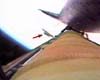 Cape Canaveral (AFP) Jul 04, 2006
Discovery's fuel tank "performed very well" during the shuttle's launch Tuesday, shedding small pieces of debris as expected without endangering the astronauts, a top NASA official said. |
|
|

| The content herein, unless otherwise known to be public domain, are Copyright 1995-2006 - SpaceDaily.AFP and UPI Wire Stories are copyright Agence France-Presse and United Press International. ESA PortalReports are copyright European Space Agency. All NASA sourced material is public domain. Additionalcopyrights may apply in whole or part to other bona fide parties. Advertising does not imply endorsement,agreement or approval of any opinions, statements or information provided by SpaceDaily on any Web page published or hosted by SpaceDaily. Privacy Statement |