|
 |
 |
 |
 |
 |
 |
 |
 |

 |
Shot Seeks Additional Customers For Space Shuttle Mission
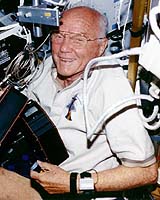
Greenville - Nov 01, 2002 The only thing missing from the otherwise well-appointed laboratory "B" at SHOT is a flashing "vacancy" sign reminiscent of what once must have been a welcome sight at the shuttered 1930's-era motel across the street. Inside the bright modern lab, engineers and scientists are busy preparing biotechnology research equipment for a 2003 launch of space shuttle Endeavour. Although SHOT already is working with several companies for mission STS-115, the modular design of its hardware means that -- at least for now -- there's still room at the inn. "That's the beauty of our cassette-based space research equipment," said SHOT Vice president and COO John C. Vellinger. "While there's a limited number of customers we can put on a given space shuttle mission, we can fly several different experiments by inserting and replacing cassettes in the processing facility while on orbit. It's perfect for a company that may not need an entire space shuttle locker." Known as the Advanced Separations processing facility (ADSEP) because it was primarily used to conduct cell separations experiments on its first shuttle mission in 1996, it is owned by SHOT and was designed and built by the company exclusively for conducting life sciences research in space. The facility, into which up to three cassettes at a time may be inserted, is the size of a single shuttle middeck locker (approximately 18" x 11"x 21"). It can launch and land with up to three cassettes inside. Additional cassettes can be transported to and from space in a separate storage facility. During STS-95, Senator John Glenn performed the cassette swapping services (detailed in his memoir) for SHOT aboard shuttle Discovery in 1998. Each cassette is approximately the size of a lunch box. There are seven different types of experiments that may be conducted in ADSEP cassettes and SHOT is completing work on designs for others under three separate NASA contracts. "Many experiments that can be done in an Earth-based chemistry lab can be done in our cassettes," said SHOT Chief Scientist Paul W. Todd, Ph.D. A participant in research experiments on more than 25 space shuttle missions, beginning with a payload launched aboard shuttle Columbia on its third mission in 1982, Todd believes conducting laboratory experiments in space has several advantages over similar research carried out on the ground. "In space it's possible to combine liquids or liquid-solid combinations that would separate from each other on Earth due to their differences in density," said Todd. "This includes experiments, which when conducted on Earth are disturbed by temperature gradients due to the natural convection process that causes warm fluid to rise." "Pharmaceutical and biotechnology companies with an interest in solidification processes, cell and tissue culturing and engineering, protein crystallization, polymer film and filter formation, chemical separation methods, and the behavior of phase-changing systems can benefit from space research using the SHOT ADSEP facility," added Todd. ADSEP has been used on previous missions to perform experiments in cell culture, drug microencapsulation, biochemical purification and extraction, protein crystal growth, surface and interfacial-phenomena and colloid dynamics. SHOT is one of only four commercial companies in the nation with an agreement with NASA that permits it to perform experiments aboard the space shuttle for its own customers. "Whether the customer is NASA, a university, or a commercial company, SHOT provides the same engineering and scientific services before, during and after the mission," said Vellinger. "The continued growth of business into low Earth orbit brings the benefits of space down to Earth," said Mark E. Nall, manager of the Space Product Development Office at NASA's Marshall Space Flight Center in Huntsville, Ala. "NASA encourages companies to seize this opportunity to conduct commercial research in microgravity. Previous commercial space efforts already have resulted in commercially-available products." SHOT is a research and technology company, which for nearly 14 years has provided equipment and services to customers performing research both in space and in ground-based laboratories. Several current contracts are with NASA to develop life sciences research hardware for flights aboard space shuttles and the International Space Station. Most recently the company's Avian Development Facility (ADF), launched aboard Endeavour in December 2001 on mission STS-108/UF-1. Community Email This Article Comment On This Article Related Links SpaceDaily Search SpaceDaily Subscribe To SpaceDaily Express Space Shuttle News at Space-Travel.Com
 Lockheed Martin Receives M$178.5 NASA Contract Extension
 Greenbelt MD (SPX) Jul 29, 2004
Lockheed Martin Wednesday announced that it has been awarded a $178.5 million, two- year contract extension from NASA for Space Shuttle and International Space Station mission operations support work. |
|
|

| The content herein, unless otherwise known to be public domain, are Copyright 1995-2006 - SpaceDaily.AFP and UPI Wire Stories are copyright Agence France-Presse and United Press International. ESA PortalReports are copyright European Space Agency. All NASA sourced material is public domain. Additionalcopyrights may apply in whole or part to other bona fide parties. Advertising does not imply endorsement,agreement or approval of any opinions, statements or information provided by SpaceDaily on any Web page published or hosted by SpaceDaily. Privacy Statement |