|
 |
 |
 |
 |
 |
 |
 |
 |

 |
Shared Satellite Architecture Enables More Efficient Mission Control
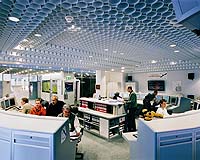
Paris, France (ESA) Apr 12, 2007 Flight Control Teams for Mars Express and Venus Express now work side-by-side for key aspects of their routine activities. The close cooperation supports team spirit, cross-training and improved efficiency. Thanks to a common spacecraft architecture and use of standardised mission control software, spacecraft controllers from the Mars Express and Venus Express Flight Control Teams (FCTs) are now able to work in tandem, each providing support to both missions and boosting team cooperation. The sharing enables reduced costs and better efficiency while maintaining reliability and boosting teamwork. Since the end of 2006, the Mars and Venus Express Dedicated Control Rooms (DCRs) have been shifted and collocated into a six-workstation 'Combined DCR' facility at ESOC; spacecraft controllers ('spacons') from each team now pull shared shifts. A spacon from either team can operate both their own and the other mission, uploading commands and monitoring routine spacecraft operations for both.
Combined shifts enable closer cooperation One of the challenges to be solved was combining and blending the widely differing spacon shifts, which were previously customised to match the orbits - and hence ground tracking station passes - of each mission. Venus Express is in a highly elliptical, once-per-24-hour orbit around Venus, while Mars Express is in a highly elliptical orbit that circles the Red Planet every 8 hours. "Venus Express is pretty regular, while Mars Express has some ground station passes lasting eight hours and some lasting ten minutes. We finally devised an eight-hour-shift schedule based on Venus Express," said Peter Wright, a spacecraft analyst for Mars Express. He adds that, "The biggest advantages have come in closer cooperation between the teams - there is better knowledge sharing and communications, as well as a bigger pool of cross-trained spacons."
Shared mission architecture in space and on the ground In addition, the spacecraft platforms of Mars Express and Venus Express - the underlying physical frame of the spacecraft supporting common functions such as power, communications, avionics systems and flight control - share a common engineering heritage and were designed and built using many of the same systems and components (as was Rosetta). Extensive cross-training boosts flexibility Traditionally, each ESA mission has a dedicated Flight Control Team (FCT) assigned to control all aspects of a single spacecraft's operations. Each spacecraft was custom-designed for its scientific tasks and planned trajectory, so the mission control system on the ground was also custom-developed and FCT members were custom-trained and worked solely on their mission. In this case, spacons, spacecraft analysts and some engineers from both missions have gone through cross-familiarisation on each other's mission, made easier by the commonalities between the two spacecraft and their mission control infrastructure. Such training is not trivial; there can be up to 20 000 parameters that affect the operation of a spacecraft like Mars or Venus Express. This commonality enabled ESA to launch the three missions to widely differing destinations on a budget which would otherwise have been much higher. The satellites' scientific instruments are, of course, customised to their intended targets, which vary widely, but even some of these are common as well. In addition, all three missions use the SCOS-2000 (Spacecraft Operating System 2000) mission control software for ground control; this software was developed at ESOC and has become the European standard system.
Boosting tech-family teamwork and reducing costs The project has further entailed a great deal of harmonisation work with respect to staff scheduling as well as scheduling of control activities and ground station communication slots. Overall, it is estimated that the project has saved the equivalent of one spacon position as well as bringing strong benefits in terms of resource sharing and efficiency. "There have been no real problems, and now there's more interesting work to do for both teams of spacons. Sitting in the same control room helps a lot; the spacons also have better morale now with two complex missions to work on," said Norbert Schmitt, a long-time ESA spacecraft engineer from the Venus Express team. Community Email This Article Comment On This Article Related Links ESA Spacecraft Operations Mars Express operations Venus Express operations All about the technology of space and more Space Technology News - Applications and Research
 EMS Technologies Announces Anti-Jam Antenna Solutions For Commercial Satellite Customers
 Colorado Springs CO (SPX) Apr 12, 2007
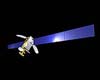
EMS Technologies announced at the 23rd National Space Symposium that its Defense and Space Systems (D and SS) Division will offer anti-jam antenna solutions to the commercial space sector. EMS D and SS, which specializes in providing beam-forming networks that enable and protect communication channels to and from communications satellites, now sees a demand for its military style anti-jam beam management system from its commercial space customers following several high-profile incidents of jamming in the international arena. |
|
|

| The content herein, unless otherwise known to be public domain, are Copyright 1995-2006 - SpaceDaily.AFP and UPI Wire Stories are copyright Agence France-Presse and United Press International. ESA PortalReports are copyright European Space Agency. All NASA sourced material is public domain. Additionalcopyrights may apply in whole or part to other bona fide parties. Advertising does not imply endorsement,agreement or approval of any opinions, statements or information provided by SpaceDaily on any Web page published or hosted by SpaceDaily. Privacy Statement |