|
 |
 |
 |
 |
 |
 |
 |
 |

 |
Sexual Reproduction Delays Aging In A Mammalian Species
Rhein-Ruhr, Germany (SPX) Feb 22, 2006 Past research on aging and the life histories of diverse species has shown that sexual reproduction is biologically costly for individuals and tends to decrease lifespan rather than increase it. But a new study by Philip Dammann and Hynek Burda from the University of Duisburg-Essen shows that, in a vertebrate species, the opposite can be true as well. The authors, studying captive Zambian mole-rats (Cryptomys anselli), analyzed breeding data gathered over the course of more than 20 years. These subterranean, almost-blind, hamster-sized rodents are among the very few mammal species that have adopted a eusocial lifestyle. This means that they live in family groups containing one breeding pair--offspring remain with their parents as (mostly whole-life) helpers--burrowing, foraging, and raising young together. Whereas the breeding pair is sexually active throughout the year, the helpers are sexually quiescent. By comparing the long-term survival of breeders and non-breeders, Dammann and Burda found that the former lived extraordinarily long (up to 20 years) and on average about twice as long as their non-breeding counterparts. The researchers were also able to show that this pattern was not caused by differences in intrinsic biological quality, social rank, or workload between breeders and non-breeders. These findings provide unexpected new information for understanding the evolution of life histories, and they shed new light on the old question of the connection between sexual activity and aging. Furthermore, as the authors argue, Cryptomys anselli could become a valuable new model organism for the study of the mechanisms that underlie aging, since this species offers the rare opportunity to study differential aging rates among individuals possessing the same genes and experiencing the same environmental conditions, apparently differing only in the aspect of pair-bonding and engaging in sexual activity. Community Email This Article Comment On This Article Related Links University of Duisburg-Essen Darwin Today At TerraDaily.com
 Oceans Are 70 Percent Shark Free
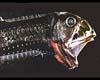 Washington DC (SPX) Feb 22, 2006
Marine scientists have discovered that the deepest oceans of the world would appear to be shark free. In a paper published today, an international team of researchers, led by the University of Aberdeen, reveal that sharks have failed to colonise at depths greater than 3,000 metres. Sharks occur throughout the world's oceans. It had been hoped that as man explores deeper into the abyss that new species would be discovered. |
|
|

| The content herein, unless otherwise known to be public domain, are Copyright 1995-2006 - SpaceDaily.AFP and UPI Wire Stories are copyright Agence France-Presse and United Press International. ESA PortalReports are copyright European Space Agency. All NASA sourced material is public domain. Additionalcopyrights may apply in whole or part to other bona fide parties. Advertising does not imply endorsement,agreement or approval of any opinions, statements or information provided by SpaceDaily on any Web page published or hosted by SpaceDaily. Privacy Statement |