|
 |
 |
 |
 |
 |
 |
 |
 |

 |
Send In The Robots
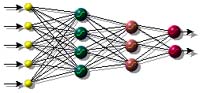
Pasadena - May 29, 2001 Ayanna Howard may never set foot on Mars or lead a mission to Jupiter, but the work she's doing on "smart" robots will help to revolutionize planetary exploration nonetheless. As a project scientist specializing in artificial intelligence at NASA's Jet Propulsion Laboratory (JPL), Ayanna is part of a team that applies creative energy to a new generation of space missions -- planetary and moon surface explorations led by autonomous robots capable of "thinking" for themselves. Nearly all of today's robotic space probes are inflexible in how they respond to the challenges they encounter (one notable exception is Deep Space 1, which employs artificial intelligence technologies). They can only perform actions that are explicitly written into their software or radioed from a human controller on Earth. When exploring unfamiliar planets millions of miles from Earth, this "obedient dog" variety of robot requires constant attention from humans. In contrast, the ultimate goal for Ayanna and her colleagues is "putting a robot on Mars and walking away, leaving it to work without direct human interaction." "We want to tell the robot to think about any obstacle it encounters just as an astronaut in the same situation would do," she says. "Our job is to help the robot think in more logical terms about turning left or right, not just by how many degrees." How could a robot possibly make decisions like a human? Scientists are developing suitable techniques by learning from humans' vision and observation abilities. Humans don't have a rulebook or program to consult for each move they make, Ayanna notes -- we're much more reactive than that. Her team's job is to produce robots that can emulate not only the thought process and judgment of a human for sizing up the terrain, but also a human's ability to drive and navigate a car in real time. To do this, Ayanna and her colleagues rely on two concepts in the field of artificial intelligence: "fuzzy logic" and "neural networks." Fuzzy logic allows computers to operate not only in terms of black and white -- true or false -- but also in shades of gray. For example, a traditional computer would take the height measurement of a tree and assign that tree to some category -- say, "tall." But a fuzzy logic computer would say the tree has a 78 percent chance (for example) of belonging to the category "tall" and a 22 percent chance of belonging to some other category. The sharp distinction between "tall" and "short" becomes fuzzy. This probabilistic approach to categorization allows the computer to learn from its experiences, since the assigning of probabilities can be adjusted the next time a similar object is encountered. Fuzzy logic is already in use today in software such as computer speech and handwriting recognition programs, which learn to perform better through "training." Neural networks also have the ability to learn from experience. This shouldn't be too surprising, since the design of neural networks mimics the way brain cells -- called "neurons" -- process information. "Neural networks allow you to associate general input to a specific output," Ayanna says. "When someone sees four legs and hears a bark (the input), their experience lets them know it is a dog (the output)." This feature of neural networks will allow a robot pioneer to choose behaviors based on the general features of its surroundings, much like humans do. To accomplish this, neural nets contain several layers of "nodes," which are analogous to neurons. Each node in one layer is connected to nodes in the other layers. Signals travel through this web of connections with each node acting as a gate, only relaying signals above a certain strength. Adjusting that threshold for individual nodes is how the network "learns."

|