|
 |
 |
 |
 |
 |
 |
 |
 |

 |
Senate Adds Millions for ASAT, Space Laser
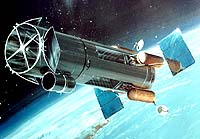
Washington - May 18, 2000 - The Senate Armed Services Committee ended its FY2001 authorizations by boosting spending on military space programs and technologies by $98.2 million, chairman Sen. John Warner's office announced last week (R-VA.). But it remains to be seen if the Clinton administration will spend the additional funds authorized should they ultimately end up in the final version of the defense spending bill to emerge from Congress this summer. Among the projects boosted is an Army anti-satellite space weapon that was one of only three defense projects targeted for a line item veto by Clinton in 1996. The veto power was since ruled unconstitutional by the U.S. Supreme Court. The Senate committee authorized $30 million more in spending on a Space-Based Laser (SBL) project which if ever built and flown may require changes in strategic arms agreements between the United States and Russia. The project, which is among the few parts of President Ronald Reagan's 1983 Strategic Defense Initiative (SDI) still surviving in research form under Clinton, would launch a prototype space laser for flight testing aboard the Evolved Expendable Launch Vehicle in the latter part of the decade. Space tests would determine if an operational version would be launched to destroy ascending missiles attacking the U.S. or allied forces. The laser system might also be used against orbiting satellites. The Clinton administration has approved only research funds for the project and has repeatedly delayed any decision on whether to proceed to construction and flight testing of prototype designs. The Senate also voted to authorize a $12 million boost in spending for a military microsatellite technology program, previously identified as Clementine II. The project was the second defense-related space program, along with the anti-satellite system and a research project for military spaceplanes, killed by the three 1996 White House vetoes. The microsatellite program is focused on developing miniaturized sensors, buses, and related technologies for future generations of reconnaissance and observation satellites and space platforms. Also added was $25 million in additional spending for Army space control technology, and $15 million more for a U.S. Air Force program to develop a space maneuver vehicle. The satellite would be a reusable spacecraft capable of moving among different orbits to deploy weapons and minisatellites. The SMV designs could also call for reusable satellites that either can be returned to Earth or parked in space for different missions. Some SMV designs call for servicing by a piloted military spaceplane. The Congressional action wasn't the first time additional money was funded for military space technology and research during the Clinton administration. But the Pentagon refused to spend any appropriated increases during either the tenure of Defense Secretaries Les Aspin or William Perry. Under current secretary William Cohen the centralized office of space management in the Pentagon was abolished in 1997 in a cost cutting move many attributed to a lack of priorities for space by Cohen's team. A Senate-appointed panel headed by former Defense Secretary Donald Rumsfeld is conducting a review of defense and national security space management and is scheduled to make a series of recommendations for future directions in military space to the incoming Presidential administration and new U.S. Congress early next year.
Email This Article Comment On This Article Related Links Space
 Satellite Launch To Boost DTH In India
 Calcutta, India (SPX) Dec 28, 2005
The successful launch Thursday of India's heaviest satellite from spaceport of Kourou in French Guyana may have boosted the country's space research efforts to yet another level, but it has also lifted the spirits of at least three Direct-To-Home televisions broadcasters, one of which has been waiting for years to launch its services in India. |
|
|

|
|
|
|
|
|
|
|
|
|
|
|
| The content herein, unless otherwise known to be public domain, are Copyright 1995-2006 - SpaceDaily.AFP and UPI Wire Stories are copyright Agence France-Presse and United Press International. ESA PortalReports are copyright European Space Agency. All NASA sourced material is public domain. Additionalcopyrights may apply in whole or part to other bona fide parties. Advertising does not imply endorsement,agreement or approval of any opinions, statements or information provided by SpaceDaily on any Web page published or hosted by SpaceDaily. Privacy Statement |