|
 |
 |
 |
 |
 |
 |
 |
 |

 |
Self Seeding: An Innovative Management System
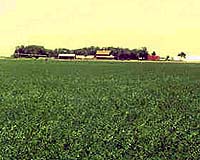
Madison WI (SPX) Apr 17, 2008 Winter cover crops provide important ecological functions that include nutrient cycling and soil cover. Although cover crop benefits to agroecosystems are well documented, cover crop use in agronomic farming systems remains low. Winter cover crops are usually planted in the fall after cash crop harvest and killed the following spring before planting the next cash crop. Recent research has identified time and money as major impediments to farmer adoption of winter cover crops. Developing innovative cover crop management systems could increase the use of winter cover crops. A scientist with the USDA Agricultural Research Service National Soil Tilth Lab and colleagues at Iowa State University investigated the potential for winter cereal cover crops to perpetuate themselves through self-seeding, thereby eliminating the cost of planting a cover crop each fall and time constraints between cash crop harvest and the onset of winter. Results from the study were published in the March-April 2008 issue of Agronomy Journal. In the research investigation, winter rye, triticale, and wheat were planted and managed chemically and mechanically in varying configurations to facilitate self-seeding. After soybean harvest in the fall of 2004 and 2005, establishment and green ground cover of self-seeded winter cover crops was measured because of their important relationships with nutrient uptake capacity and soil erosion protection. The study revealed that plant establishment through self-seeding was generally accomplished within one week after soybean harvest. Green ground cover and self-seeding was consistently higher with wheat. "The significance of this research, in addition to lowering the cost and risk of establishing cover crops, is to extend the ecological functions that cover crops perform beyond the normal cover crop termination dates between mid-April and early May," says Dr. Jeremy Singer of the National Soil Tilth Lab. "Furthermore, producers using organic crop production techniques could adopt these systems because of the potential for enhanced weed suppression without soil disturbance." According to Singer, increasing the presence of cover crops on the landscape can increase nutrient capture and lower soil erosion, both of which can improve water quality. Research is ongoing at the National Soil Tilth Lab to identify self-seeded cover crop systems that minimize competition with cash crops and maximize the effectiveness of self-propagation. The impacts of cover crops on soil quality in systems with biomass removal are also being investigated because cover crops can help offset the carbon and nutrient losses that occur when biomass is harvested in row crop production systems. Community Email This Article Comment On This Article Related Links American Society of Agronomy (ASA) Farming Today - Suppliers and Technology
 Analysis: Food insecurity will grow
 Washington, April 16, 2008
 This week's decision by President Bush to boost U.S. food aid by $200 million and U.N. Secretary-General Ban Ki-moon's call for greater grain productivity only highlight the huge and intractable challenge global policymakers confront: a long-term food insecurity crisis among the world's poor. |
|
|

| The content herein, unless otherwise known to be public domain, are Copyright 1995-2007 - SpaceDaily.AFP and UPI Wire Stories are copyright Agence France-Presse and United Press International. ESA Portal Reports are copyright European Space Agency. All NASA sourced material is public domain. Additional copyrights may apply in whole or part to other bona fide parties. Advertising does not imply endorsement,agreement or approval of any opinions, statements or information provided by SpaceDaily on any Web page published or hosted by SpaceDaily. Privacy Statement |