
 |
 |
 |
 |
 |
 |
 |
 |
 |

 |
Self-Repairing Aircraft Could Revolutionize Aviation Safety
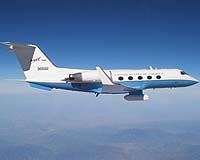
London, UK (SPX) May 20, 2008 A new technique that mimics healing processes found in nature could enable damaged aircraft to mend themselves automatically, even during a flight. As well as the obvious safety benefits, this breakthrough could make it possible to design lighter aeroplanes in future. This would lead to fuel savings, cutting costs for airlines and passengers and reducing carbon emissions too. The technique works like this. If a tiny hole/crack appears in the aircraft (e.g. due to wear and tear, fatigue, a stone striking the plane etc), epoxy resin would 'bleed' from embedded vessels near the hole/crack and quickly seal it up, restoring structural integrity. By mixing dye into the resin, any 'self-mends' could be made to show as coloured patches that could easily be pinpointed during subsequent ground inspections, and a full repair carried out if necessary. This simple but ingenious technique, similar to the bruising and bleeding/healing processes we see after we cut ourselves, has been developed by aerospace engineers at Bristol University, with funding from the Engineering and Physical Sciences Research Council (EPSRC). It has potential to be applied wherever fibre-reinforced polymer (FRP) composites are used. These lightweight, high-performance materials are proving increasingly popular not only in aircraft but also in car, wind turbine and even spacecraft manufacture. The new self-repair system could therefore have an impact in all these fields. The technique's innovative aspect involves filling the hollow glass fibres contained in FRP composites with resin and hardener. If the fibres break, the resin and hardener ooze out, enabling the composite to recover up to 80-90% of its original strength - comfortably allowing a plane to function at its normal operational load. "This approach can deal with small-scale damage that's not obvious to the naked eye but which might lead to serious failures in structural integrity if it escapes attention," says Dr Ian Bond, who has led the project. "It's intended to complement rather than replace conventional inspection and maintenance routines, which can readily pick up larger-scale damage, caused by a bird strike, for example." By further improving the already excellent safety characteristics of FRP composites, the self-healing system could encourage even more rapid uptake of these materials in the aerospace sector. A key benefit would be that aircraft designs including more FRP composites would be significantly lighter than the primarily aluminium-based models currently in service. Even a small reduction in weight equates to substantial fuel savings over an aircraft's lifetime. "This project represents just the first step", says Ian Bond. "We're also developing systems where the healing agent isn't contained in individual glass fibres but actually moves around as part of a fully integrated vascular network, just like the circulatory systems found in animals and plants. "Such a system could have its healing agent refilled or replaced and could repeatedly heal a structure throughout its lifetime. Furthermore, it offers potential for developing other biological-type functions in man-made structures, such as controlling temperature or distributing energy sources." The new self-repair technique developed by the current EPSRC-funded project could be available for commercial use within around four years. Community Email This Article Comment On This Article Share This Article With Planet Earth
Related Links Engineering and Physical Sciences Research Council Space Technology News - Applications and Research
 Graphene-Based Gadgets May Be Just Years Away
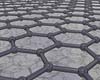 Manchester, UK (SPX) May 01, 2008
Researchers at The University of Manchester have produced tiny liquid crystal devices with electrodes made from graphene - an exciting development that could lead to computer and TV displays based on this technology. |
|
|

| The content herein, unless otherwise known to be public domain, are Copyright 1995-2007 - SpaceDaily.AFP and UPI Wire Stories are copyright Agence France-Presse and United Press International. ESA Portal Reports are copyright European Space Agency. All NASA sourced material is public domain. Additional copyrights may apply in whole or part to other bona fide parties. Advertising does not imply endorsement,agreement or approval of any opinions, statements or information provided by SpaceDaily on any Web page published or hosted by SpaceDaily. Privacy Statement |
 del.icio.us
 Digg
Digg Reddit
 YahooMyWeb
 Google
 Facebook