|
 |
 |
 |
 |
 |
 |
 |
 |

 |
Self-Assembling Proteins Could Help Repair Human Tissue
Baltimore - Mar 29, 2004 Protein hydrogels can be genetically engineered to promote the growth of specific cells Johns Hopkins University researchers have created a new class of artificial proteins that can assemble themselves into a gel and encourage the growth of selected cell types. This biomaterial, which can be tailored to send different biological signals to cells, is expected to help scientists who are developing new ways to repair injured or diseased body parts. "We're trying to give an important new tool to tissue engineers to help them do their work more quickly and efficiently," said James L. Harden, whose lab team developed the new biomaterial. "We're the first to produce a self-assembling protein gel that can present several different biological signals to stimulate the growth of cells." Harden, an assistant professor in the Department of Chemical and Biomolecular Engineering, reported on his work March 28 in Anaheim, Calif., at the 227th national meeting of the American Chemical Society. His department is within the Whiting School of Engineering at Johns Hopkins. Tissue engineers use hydrogels, which are macromolecular networks immersed in an aqueous environment, to provide a framework or scaffold upon which to grow cells. These scientists hope to advance their techniques to the point where they can treat medical ailments by growing replacement cartilage, bones, organs and other tissue in the lab or within a human body. The Harden lab's new hydrogel is made by mixing specially designed modular proteins in a buffered water solution. Each protein consists of a flexible central coil, containing a bioactive sequence and flanked by helical associating modules on each end. These end-modules come in three distinct types, which are designed to attract each other and form three-member bundles. This bundling leads to the formation of a regular network structure of proteins with three-member junctions linked together by the flexible coil modules. In this way, the new biomaterial assembles itself spontaneously when the protein elements are added to the solution. The assembly process involves three different "sticky" ends. But between any two ends, Harden can insert one or more bioactive sequences, drawing from a large collection of known sequences. Once the gel has formed, each central bioactive module is capable of presenting a specific biological signal to the tissue engineer's target cells. Certain signals are needed to encourage the adhesion, proliferation and differentiation of cells in order to form particular types of tissue. Harden's goal is to provide a large combinatorial "library" of these genetically engineered proteins. A tissue engineer could then draw from this collection to create a hydrogel for a particular purpose. "We want to let the end-user mix and match the modules to produce different types of hydrogels for selected cell and tissue engineering projects," he said. Harden believes this technique may speed up progress in the tissue engineering field. For one thing, tissue engineers would not have to do complex chemistry work to prepare a hydrogel for each specific application; his hydrogels form spontaneously upon mixing with water. Also, unlike hydrogels that are made from synthetic polymers, the Harden team's hydrogels are made of amino acids, the native building blocks of all proteins within the body. Finally, more than one protein signaling segment can be included in the Harden team's hydrogel mix, allowing a tissue engineer to send multiple signals to the target cells, thereby supporting the simultaneous growth of several types of cells within one tissue. "Our philosophy is to take a minimalist approach," Harden said. "Our hydrogels are designed to send only the growth signals that are needed for a particular application." Harden's colleagues in the hydrogel research are Lixin Mi, who earned his doctorate at Johns Hopkins and now is a postdoctoral researcher at the National Institutes of Health; and Stephen Fischer, a current doctoral student in the Department of Chemical and Biomolecular Engineering. Community Email This Article Comment On This Article Related Links Chemical & Biomolecular Engineering SpaceDaily Search SpaceDaily Subscribe To SpaceDaily Express Space Medicine Technology and Systems
 Genomic Sequences Processed In Minutes, Rather Than Weeks
 Richland WA (SPX) Jun 22, 2005
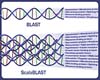
A new computational tool developed at the Department of Energy's Pacific Northwest National Laboratory is speeding up our understanding of the machinery of life - bringing us one step closer to curing diseases, finding safer ways to clean the environment and protecting the country against biological threats. |
|
|

| The content herein, unless otherwise known to be public domain, are Copyright 1995-2006 - SpaceDaily.AFP and UPI Wire Stories are copyright Agence France-Presse and United Press International. ESA PortalReports are copyright European Space Agency. All NASA sourced material is public domain. Additionalcopyrights may apply in whole or part to other bona fide parties. Advertising does not imply endorsement,agreement or approval of any opinions, statements or information provided by SpaceDaily on any Web page published or hosted by SpaceDaily. Privacy Statement |