
 |
 |
 |
 |
 |
 |
 |
 |
 |

 |
Second Chinese-Brazilian Satellite Fulfils 5-Year Mission In Orbit
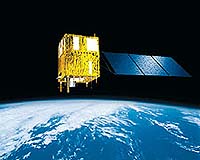
Rio De Janeiro, Brazil (XNA) Oct 23, 2008 The second earth resource satellite, CBERS-2, developed jointly by Brazil and China, fulfilled its five years' mission in orbit on Tuesday, the National Institute of Space Investigations of Brazil (INEP) said. The CBERS-2 was launched on Oct. 21, 2003 by the Chinese Long March 4B rocket from Taiyuan launch facilities in China. Sample images from CBERS-2 were made available on Jan. 10, 2007. It was the second satellite of the Chinese-Brazilian Earth Resource Satellite (CBERS) program, agreed by both countries 20 years ago to develop, launch and operate satellites together. The first satellite, CBERS-1, was launched on Oct. 14, 1999 and operated for four years till August 2003. The agreement between the two countries foresees the launch of two other satellites, the CBERS-3 and CBERS-4, till 2013. The CBERS is currently part of the main Earth-observing mission programs in the world, together with the U.S. Landsat, French Spotand Indian ResoruceSat. According to the INEP, the program is a successful example of South-South cooperation on high technology.
Source: Xinhua News Agency Community Email This Article Comment On This Article Share This Article With Planet Earth
Related Links National Institute of Space Investigations of Brazil (INEP) The latest information about the Commercial Satellite Industry
 Iridium Launches New, Powerful Satellite Phone
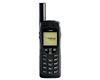 Bethesda MD (SPX) Oct 21, 2008
Iridium Satellite has unveiled its smallest, most powerful satellite phone - the Iridium "9555" - at its annual Partner Conference in Miami, Fla. The innovative, all-new design of the 9555 offers a significantly reduced size, a more hand-friendly form factor, an intuitive user interface, and new features such as an internally stowed antenna. |
|
|

| The content herein, unless otherwise known to be public domain, are Copyright 1995-2007 - SpaceDaily.AFP and UPI Wire Stories are copyright Agence France-Presse and United Press International. ESA Portal Reports are copyright European Space Agency. All NASA sourced material is public domain. Additional copyrights may apply in whole or part to other bona fide parties. Advertising does not imply endorsement,agreement or approval of any opinions, statements or information provided by SpaceDaily on any Web page published or hosted by SpaceDaily. Privacy Statement |
 del.icio.us
 Digg
Digg Reddit
 YahooMyWeb
 Google
 Facebook