|
 |
 |
 |
 |
 |
 |
 |
 |

 |
Searing Heat, Little Package
Arlington VA (SPX) Jul 02, 2004 Engineers have created a miniature hotplate that can reach temperatures above 1100�C (2012�F), self-contained within a "laboratory" no bigger than a child's shoe. The micro-hotplates are only a few dozen microns across (roughly the width of a human hair), yet are capable of serving as substrates, heaters and conductors for thin-film experiments ranging from material analyses to the development of advanced sensors. Researchers at Boston MicroSystems, Inc. craft the hotplates out of silicon carbide, a robust material that can tolerate extreme heat and reach peak temperature in less than one-thousandth of a second. Silicon carbide is not only stable at high temperatures, it is also impervious to chemical attack from most materials. As a result, the hotplates can be cleaned by merely burning debris off the surface. Contained on a microchip, the tiny "labs" reside within a polycarbonate chamber that can endure near-vacuum pressures. Ports on the chamber's sides allow gases to pass through and feed experiments, and because of the chamber's transparency, researchers can observe experiments with a microscope as they progress. The hotplates also contain an integrated temperature gauge and a pair of electrodes. These components allow researchers to test the electrical properties of various materials that may be deposited onto the hotplates. Using the stable, thin-film deposition properties and integrated circuitry of the hotplates, researchers are already developing applications such as oxygen and engine emission sensors. The sensor may have several advantages over devices in today's combustion engines, due to the micro-hotplate's chemical stability, small size, rapid response and low power consumption. Community Email This Article Comment On This Article Related Links Boston MicroSystems SpaceDaily Search SpaceDaily Subscribe To SpaceDaily Express Space Technology News - Applications and Research
 Industry Team Achieve New Communications Technology With AESA Radars
 Baltimore MD (SPX) Jan 12, 2006
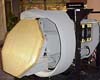
A team comprised of three leading US aerospace and defense contractors has demonstrated an innovative technological use of active electronically scanned array (AESA) radars for high-bandwidth communications. |
|
|

| The content herein, unless otherwise known to be public domain, are Copyright 1995-2006 - SpaceDaily.AFP and UPI Wire Stories are copyright Agence France-Presse and United Press International. ESA PortalReports are copyright European Space Agency. All NASA sourced material is public domain. Additionalcopyrights may apply in whole or part to other bona fide parties. Advertising does not imply endorsement,agreement or approval of any opinions, statements or information provided by SpaceDaily on any Web page published or hosted by SpaceDaily. Privacy Statement |