|
 |
 |
 |
 |
 |
 |
 |
 |

 |
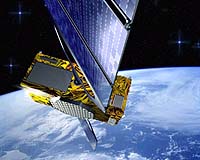
Search And Rescue Unit For Galileo Under Way
Beijing (XNA) Aug 09, 2005 Work on vital search and rescue satellite technology for the Galileo System has started in Xi'an, China. Research and production of the Galileo Search and Rescue Payload (G-SAR), part of the Galileo global satellite navigation system, has begun at the Xi'an Space Radio Technology Research Institute, in Northwest China's Shaanxi Province. According to Chen Jianrong, manager of the project and a researcher at the institute, the G-SAR is one of the most important parts of the planned global navigation satellites, vital in supporting search and rescue work around the world. "According to the plan, the first G-SAR will be made and sent for approval next July. The project will be completed in June 2007," Chen told China Daily. The Galileo System, initiated by the European Commission and European Space Agency, is a European instigated global navigation satellite system, providing a highly accurate, civilian global positioning service, according to official Galileo sources. If all goes to plan, the 3.5 billion euro (US$4.3 billion), 30 satellite projects will be put into operation in 2008. "It will be inter-operable with GPS and GLONASS, the two other global satellite navigation systems," sources said. China is the first non-EU country to enter into the Galileo project, promising to invest 200 million euros (US$244 million) on the research. On July 28, China signed three contracts for the system, and will take part in seven specific projects, Chen said. "China has invested 70 million euros (US$85 million) in technological research of the Galileo System, and plans to use the remaining 130 million euros (US$159 million) for arranging space and field facilities," he added. The European Commission predicts that by 2020 the Galileo System will have generated income of more than 10 billion euros (US$12.2 billion), creating thousands of jobs. Chinese experts expect the project to bring 260 billion yuan (US$32.1 billion) of economic benefit to China's satellite navigation industry by 2020. Source: Xinhua News Agency Community Email This Article Comment On This Article Related Links SpaceDaily Search SpaceDaily Subscribe To SpaceDaily Express GPS Applications, Technology and Suppliers
 Galileo GIOVEA Using Marotta Equipment For Its Propulsion Systems
 Cheltenham, England (SPX) Jan 09, 2006
Marotta UK is pleased to announce that it designed, developed and qualified equipment for the cold gas propulsion systems on board the Galileo GIOVE-A, part of Europe's Galileo navigation program, successfully launched by Surrey Satellite Technology (SSTL). |
|
|

| The content herein, unless otherwise known to be public domain, are Copyright 1995-2006 - SpaceDaily.AFP and UPI Wire Stories are copyright Agence France-Presse and United Press International. ESA PortalReports are copyright European Space Agency. All NASA sourced material is public domain. Additionalcopyrights may apply in whole or part to other bona fide parties. Advertising does not imply endorsement,agreement or approval of any opinions, statements or information provided by SpaceDaily on any Web page published or hosted by SpaceDaily. Privacy Statement |