
 |
 |
 |
 |
 |
 |
 |
 |
 |

 |
Sea Launch Prepares For The Launch Of Galaxy 19
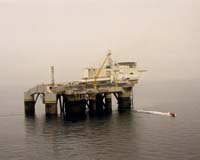
Long Beach CA (SPX) Sep 15, 2008 The Sea Launch vessels have departed Sea Launch Home Port and are now on their way to the Equator for the launch of Intelsat's Galaxy 19 satellite, on September 23. Liftoff is planned for 2:28am Pacific Daylight Time (9:28 GMT), at the opening of a two-hour launch window. Upon arrival at the launch site, at 154 degrees West Longitude, the Sea Launch team will initiate a 72-hour countdown. After ballasting the Odyssey Launch Platform to launch depth, the team will rollout and erect a Zenit-3SL rocket on the launch pad, execute final tests and then proceed with fueling operations and launch. Prior to fueling, all personnel on the Launch Platform will transfer to the Sea Launch Commander for the duration of the mission. The team monitors both marine and launch operations remotely from the ship, positioned about four miles uprange of the platform. On launch day, the Zenit-3SL vehicle will lift the 4,690 kg (10,316 lb) Galaxy 19 spacecraft to geosynchronous transfer orbit. Built by Space Systems/Loral (SS/L), the 1300-series hybrid spacecraft carries a total of 52 physical transponders. The Galaxy 19 satellite will provide Intelsat customers valuable 50-state coverage, as well the Caribbean, Canada and Mexico. It will be located at 97 degrees West Longitude. Community Email This Article Comment On This Article Share This Article With Planet Earth
Related Links Sea Launch Launch Pad at Space-Travel.com
 New Impulse To Russian Rockets
 Moscow (RIA Novosti) Sep 15, 2008
Russian space launch vehicles are winning even more popularity with potential customers, as domestic engine developers have managed to create a versatile re-useable liquid-propellant engine, bringing to life an old dream of the world's rocket engineers. |
|
|

| The content herein, unless otherwise known to be public domain, are Copyright 1995-2007 - SpaceDaily.AFP and UPI Wire Stories are copyright Agence France-Presse and United Press International. ESA Portal Reports are copyright European Space Agency. All NASA sourced material is public domain. Additional copyrights may apply in whole or part to other bona fide parties. Advertising does not imply endorsement,agreement or approval of any opinions, statements or information provided by SpaceDaily on any Web page published or hosted by SpaceDaily. Privacy Statement |
 del.icio.us
 Digg
Digg Reddit
 YahooMyWeb
 Google
 Facebook