|
 |
 |
 |
 |
 |
 |
 |
 |

 |
Scientists sound alarm over starfish threat in Indonesia
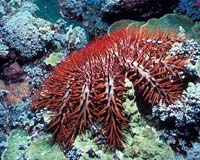
Jakarta (AFP) Jan 15, 2008 The predatory crown of thorns starfish is threatening Indonesia's portion of the "coral triangle," the richest area of coral reef biodiversity on the planet, scientists warned Tuesday. The starfish have been discovered in large numbers by researchers from the Wildlife Conservation Society and the Australian-based ARC Centre of Excellence for Coral Reef Studies, who surveyed reefs around Halmahera in Indonesia's Maluku Islands, a press release said. The triangle lies between Indonesia, Malaysia, the Philippines, Papua New Guinea and the Solomon Islands and contains more than half the world's reefs, considered building blocks for marine life. More than 600 species of coral -- 76 percent of those known -- and more than 3,000 plant and fish species live in the triangle's waters. Scientists said they feared the growth in numbers of the starfish was caused by poor water quality and could be an early warning of widespread reef decline. "We witnessed a number of active outbreaks of this coral predator. There was little to suggest that the reefs have been much affected by climate change as yet. The threats appear far more localised," said Andrew Baird from the Centre of Excellence in the statement. The starfish feeds on coral by spreading its stomach over them and using digestive enzymes to liquify tissue. Researchers also saw evidence of blast-fishing which had occurred following communal violence in recent years. "The good news is that the reef fish assemblages are still in very good shape," said the Wildlife Conservation Society's Tasrif Kartawijaya. "So these reefs have the capacity to recover if we can address the current threats." The Coral Triangle Initiative announced by six regional governments at last year's climate change conference in Bali "offers hope for the reefs in the region," the researchers said. They said however that the role of research under the initiative, which they see as crucial in working out how to respond to threats on the reef, should be made clearer. The initiative aims to establish a network of protected marine zones, to decrease wear and tear on the reefs caused by the fishing industry and to promote eco-tourism. Marine resources in the coral triangle provide a living for 120 million people and one-third of the world's tuna catches come from the area. Community Email This Article Comment On This Article Related Links Darwin Today At TerraDaily.com
 Sea Otter Study Reveals Striking Variability In Diets And Feeding Strategies
 Santa Cruz CA (SPX) Jan 15, 2008
Ecologists have long observed that when food becomes scarce, animal populations exploit a wider range of food sources. So scientists studying southern sea otters at different sites in California's coastal waters were not surprised to find that the dietary diversity of the population is higher where food is limited. But this diversity was not reflected in the diets of individual sea otters, which instead showed dietary specialization in response to limited food. |
|
|

| The content herein, unless otherwise known to be public domain, are Copyright 1995-2007 - SpaceDaily.AFP and UPI Wire Stories are copyright Agence France-Presse and United Press International. ESA Portal Reports are copyright European Space Agency. All NASA sourced material is public domain. Additional copyrights may apply in whole or part to other bona fide parties. Advertising does not imply endorsement,agreement or approval of any opinions, statements or information provided by SpaceDaily on any Web page published or hosted by SpaceDaily. Privacy Statement |