|
 |
 |
 |
 |
 |
 |
 |
 |

 |
Scientists Find Clues To Memory Health
San Francisco, (UPI) July 12, 2005 - Misplaced keys, faltering name recall, incomplete thoughts -- by age 50, many otherwise healthy adults begin to notice these insidious symptoms, all signs of short-term memory loss. Indeed, as we age, our memory function can decline by as much as 45 percent, researchers have found. Much remains to be learned about the processes that underlie memory loss, but science is beginning to discover ways to abate - and possibly to halt - cognitive decline. According to Michael Merzenich, chief scientific officer with Posit Science in San Francisco, the key to memory longevity is lifelong learning. "Often, as people age, they engage in less and less learning," Merzenich told United Press International. "They rest on their laurels, and their environments, even if stimulating (such as a job or hobbies), do not drive new learning." Merzenich's company is pioneering brain-training exercises for aging adults that, like calisthenics, keep the organ flexible, in good physical shape and functioning well into the golden years. The company's computer-guided exercises - which are being marketing to assisted-living and retirement communities - aim at augmenting memory and improving visual acuity and hearing. The memory exercises should be practiced five days a week for an hour a day for eight weeks - a demanding regimen, but one that researchers think may mitigate memory loss. "As the brain gets into ruts, it is not challenged with new learning, and without crucial stimulation, the brain's function can gradually erode over time, leading to decreased memory and cognitive function," Merzenich explained. Undertaking a rigorous "brain fitness" program later in life may be only part of the answer, said Dr. Thomas Crook, former chief of the National Institute of Mental Health's Geriatric Psychopharmacology Program. Diet plays an absolutely key role in determining brain function later in life, he said, and establishing healthy eating habits early on can deliver dividends in old age. "Diet is very important. A generalization would be that those things that are good for the heart are good for the brain as well," Crook told UPI. "We eat such massive amounts of food in this country that we end up with obesity and diabetes, which are in themselves problematic for memory." Likewise, exercise appears to contribute to better brain health, he said. "A lot of research is showing that aerobic exercise is particularly helpful," Crook said. "Even 30 minutes of walking per day can help. We know that vascular changes in the heart also apply to the brain, and exercise benefits both." The cartoon character Popeye may have been on to something, with his enthusiastic endorsement of spinach. According to a 2005 study by Harvard University researchers, fruit and vegetable intake is inversely related to cognitive decline - the more fresh foods you eat, the better your chances of maintaining brain health. The Harvard group followed a cohort of female subjects from 1976 to 2001 and tracked their eating habits along with mental function over four decades. They found that the women who ate the highest amounts of green leafy vegetables (such as broccoli, greens and spinach) had the slowest mental decline. "The finding with cruciferous vegetables, we believe, may be because they are nutrient dense - good source of vitamin C, beta carotene, B vitamins, which have all been found in some studies to be associated with better cognition," said Jae Hee Kang, lead author of the Harvard study. Crook also noted that a new compound of neuropeptides marketed as a dietary supplement appears to enhance nerve-cell synaptic and dendritic growth -- a process associated with improved memory. "We think the supplement is a useful addition to a heart healthy diet that includes low-fat food and modest portion sizes," he said. Crook conducted clinical trials on the compound, which has not yet hit the market. Despite his enthusiasm for the new supplement's potential benefits, however, he said most "nutriceuticals," including the much-touted gingko biloba, do not work. "There's no sound evidence that Ginkgo, nor any of the witch's brews sold under clever names, improves learning and memory," Crook said. "I'm really quite negative about nutriceuticals in general." Before adults over age 50 start popping supplements and loading up on spinach, they should consult their physicians, who can assess if their perceived forgetfulness is, in fact, attributable to age-related memory loss. Sometimes, absent-mindedness may not be serious and can be confused with something as simple as fatigue, University of California, San Diego, researchers have found. They wrote in the July 2005 issue of the Journal of the American Geriatric Society that senior adults have more difficulty getting a good night's sleep because the body's circadian rhythms change with age. Seniors also may experience insomnia as a side effect of one of the many medications prescribed to older adults. The bottom line is that a good memory - like a fabulously fit body - requires good habits, diligence and discipline, Crook said. "It doesn't happen magically," he said. "It's like being in shape; you have to do a lot of work and exercise to get better at it." K.L. Capozza covers health matters for UPI Science News. Community Email This Article Comment On This Article Related Links SpaceDaily Search SpaceDaily Subscribe To SpaceDaily Express All About Human Beings and How We Got To Be Here
 Distinct Brain Regions Specialized For Faces And Bodies
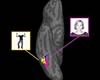 Cambridge MA (SPX) Dec 01, 2005
Are you tempted to trade in last year's digital camera for a newer model with even more megapixels? Researchers who make images of the human brain have the same obsession with increasing their pixel count, which increases the sharpness (or "spatial resolution") of their images. |
|
|

| The content herein, unless otherwise known to be public domain, are Copyright 1995-2006 - SpaceDaily.AFP and UPI Wire Stories are copyright Agence France-Presse and United Press International. ESA PortalReports are copyright European Space Agency. All NASA sourced material is public domain. Additionalcopyrights may apply in whole or part to other bona fide parties. Advertising does not imply endorsement,agreement or approval of any opinions, statements or information provided by SpaceDaily on any Web page published or hosted by SpaceDaily. Privacy Statement |