|
 |
 |
 |
 |
 |
 |
 |
 |

 |
Scientists Discover Air Is Heavier Than We Thought
Korea (SPX) Nov 23, 2004 Scientists have discovered that the air in the atmosphere around us is heavier (more dense) than they had previously thought. Knowing this will enable scientists to measure the mass of objects more accurately than ever before. Writing in the Institute of Physics journal Metrologia, a team from the Korea Research Institute of Standards and Science (KRISS) and the International Bureau of Weights and Measures (BIPM) in France, report a new determination of the content of argon in air, the first since 1969. If asked to name the major chemical components of air, most of us would list oxygen (about 21%), carbon dioxide (about 0.04%) and water vapour (typically about 1%). The principal component of air is nitrogen and the only other major component is argon (about 0.9 %). Argon is chemically inert and its presence in the atmosphere poses no problem to human well-being. Old measurements dating from as early as 1903 gave the content (moles of argon/mole of dry air) as 0.934 %. The most recent value available until now was lower (0.917 %) and was thought to supersede the previous result. The work reported in Metrologia gives a new figure (0.9332 � 0.0006)%, very close to the measurement results of 100 years ago. The uncertainty in the new measurement is given at the 95% confidence limit and is of unprecedented accuracy. The analysis was performed at KRISS using high precision mass spectrometry. A set of air-like calibration gas mixtures was prepared by very careful weighing of pure gases into high pressure cylinders. Analysis of these synthetic air mixtures along with samples of natural air contained in other high pressure cylinders yielded the result reported in Metrologia. Argon content is important to a small community of scientists working on precision mass measurements. To understand why, think of the old puzzle: which weighs more, a kilogram of feathers or a kilogram of lead? If it were possible to do the weighing on a very precise balance, we would see that the balance readings are identical for the feathers and the lead if the weighing is carried out in a vacuum. But the feathers would produce a considerably lower balance reading for measurements in air. This is because feathers are more buoyant in air than is lead (Achimedes' Principle). Mass metrologists use an equation to correct for the effect of air buoyancy. The equation includes the air density which, in turn, includes a parameter for the content of argon in the atmosphere. The different historical values for argon content lead to a difference in air density of just under 0.01%, or about 15 micrograms in the apparent mass of one kilogram made of stainless steel (15 parts in 109). The higher the argon content, the denser the air. Even though the density of air is roughly 800 times smaller than water density, the effects of air buoyancy are easily seen in precise weighing. Thus the air density calculated from the new value of argon content should agree with precise data obtained from the feathers and lead experiment. There is a stainless-steel cylinder on one side, which is hollow inside, representing the low-density feathers. On the other, a thick-walled tube is a solid piece of stainless steel, thereby representing the high-density lead. The cylinder and tube have the same surface area, which simplifies analysis of the experimental data. The results of measurements with several different sets of hollow and solid objects are reported in a companion article in Metrologia, written by scientists at the BIPM and the Physikalisch-Technische Bundesanstalt, in Germany. Michael Esler, from the Chemistry Section at BIPM, and one of the authors, said: "The results confirm the new argon content and can explain discrepancies that had already been observed using the previously-accepted value dating from the mid-20th century. The new determination of argon content was motivated by numerous mass measurements which stubbornly failed to agree with the accepted formula for air density. The new results should lead to improved coherence among high precision mass measurements". Community Email This Article Comment On This Article Related Links KRISS BIPM SpaceDaily Search SpaceDaily Subscribe To SpaceDaily Express Earth Observation News - Suppiliers, Technology and Application
 New Legislation Initiated To Support Commercial Remote Sensing Industry
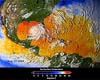 New York NY (SPX) Jan 11, 2006
The importance of remotely sensed data and technologies to support natural disasters has prompted attention and action in Washington. New initiatives and legislation authorizing appropriations to the remote sensing industry will be discussed at Strategic Research Institute's U.S. Commercial Remote Sensing Industry conference, scheduled for February 9-10, 2006 in Washington D.C. |
|
|

| The content herein, unless otherwise known to be public domain, are Copyright 1995-2006 - SpaceDaily.AFP and UPI Wire Stories are copyright Agence France-Presse and United Press International. ESA PortalReports are copyright European Space Agency. All NASA sourced material is public domain. Additionalcopyrights may apply in whole or part to other bona fide parties. Advertising does not imply endorsement,agreement or approval of any opinions, statements or information provided by SpaceDaily on any Web page published or hosted by SpaceDaily. Privacy Statement |