|
 |
 |
 |
 |
 |
 |
 |
 |

 |
Scientists Developing Artificial Plants To Counter Carbon Emissions
Sydney - Nov 27, 2000 Australian researchers are developing revolutionary technology that may help to combat the Greenhouse Effect and create food and an alternative source of fuel at the same time. Scientists at CSIRO's Telecommunications and Industrial Physics are developing artificial photosynthesis, which copies what plants do by taking light and carbon dioxide and converting them to energy to produce food. The researchers hope that this technology will be used one day to clean up carbon dioxide waste and reduce the "Greenhouse Effect". "In nature, leaves absorb carbon dioxide from the air and convert it to sugar and other carbon products," says project leader Dr Vijoleta Braach-Maksvytis. "By imitating this process with a mix of manufactured materials instead of chlorophyll, we are hoping to develop technology that can reduce the large amounts of carbon dioxide emitted into the atmosphere from power stations and cars." "Byproducts of the process could be a valuable alternative fuel, methane, or even food in the form of starches and sugars." The research is still in its early days, but has started to show encouraging results according to Dr Braach-Maksvytis. "We are getting our first results now. So far we have been able to produce energy in the lab, and also we have produced methane, but we still have a long way to go." The artificial photosynthesis project is one example of technology that is being developed by imitating processes in nature, particularly at the nano level. Nature's manufacturing process is called "self-assembly". Self-assembly builds from the bottom up, atom by atom, molecule by molecule, choosing the right components to drive the assembly of the final intricate and complex material, device, or system such as the eyeor photosynthesis. This same principle is being used to manufacture, from the bottom up, things as diverse as "green" computer chips and environmental gas sensors. "The manufacture of chips for the computer industry is an expensive and above all, toxic process," Dr Braach-Maksvytis says. "The demand for ever smaller dimensions is pushing the chips into the dimensions of the nanometre, (that is, one billionth of a metre), which overlaps with the dimensions of biology. Our work in this field is to develop a nano smart structure � a self-assembly 'stamping' technique � to safely and easily produce integrated circuit components on silicon chips and semiconductors." Australia is extremely well placed to take advantage of the opportunities offered by these new branches of technology Dr Braach- Maksvytis says. "The successful adaptation of Nature's processes in nanotechnology is critically dependent on working at the cross-over point between many different types of science � physics, chemistry, biology, mathematics, engineering. "Other countries are starting to get the networks and seed funding in place to start this work. This is where Australia has the advantage. We already have them in place, with an organisation such as CSIRO, together with government, other research institutions, and industry links across diverse markets. Let's not settle for niche markets � Australia has the capacity to lead nanotechnology." Community Email This Article Comment On This Article Related Links SpaceDaily Search SpaceDaily Subscribe To SpaceDaily Express Dirt, rocks and all the stuff we stand on firmly
 Magnetic Reconnection Region Larger Than 2.5 Million Km Found In The Solar Wind
 Paris (ESA) Jan 12, 2006
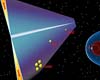
Using the ESA Cluster spacecraft and the NASA Wind and ACE satellites, a team of American and European scientists have discovered the largest jets of particles created between the Earth and the Sun by magnetic reconnection. This result makes the cover of this week's issue of Nature. |
|
|

|
|
|
|
|
|
|
|
|
|
|
|
| The content herein, unless otherwise known to be public domain, are Copyright 1995-2006 - SpaceDaily.AFP and UPI Wire Stories are copyright Agence France-Presse and United Press International. ESA PortalReports are copyright European Space Agency. All NASA sourced material is public domain. Additionalcopyrights may apply in whole or part to other bona fide parties. Advertising does not imply endorsement,agreement or approval of any opinions, statements or information provided by SpaceDaily on any Web page published or hosted by SpaceDaily. Privacy Statement |