|
 |
 |
 |
 |
 |
 |
 |
 |

 |
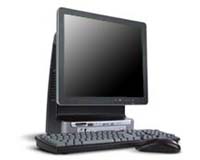
Scientists Build Space Age Space Computer
Gainesville FL (SPX) Oct 31, 2006 U.S. scientists say they are developing a space computer that will operate as much as 100 times faster than any computer in space today. Engineering researchers at the University of Florida and Honeywell Aerospace are designing and building the computer that's needed to process the rapidly increasing amounts of data being gathered by orbiting satellites. It is also needed to help space probes make more rapid decisions by themselves, independent of their Earth-bound minders. "To explore space and to support Earth and space science, there is a great need for much more processing power in space," said Alan George, UF's principal investigator on the project. Computers have become far more powerful and faster in recent decades, but these advances have been largely confined to Earth. That's because space computers must be protected from cosmic radiation, and that slows their performance and increases their size and cost. The UF-Honeywell computer will cope with cosmic rays through software that allows the computer to survive radiation-caused flaws or errors. The completed computer is expected to fly into space aboard an unmanned ST8 rocket mission in February 2009.
Source: United Press International Community Email This Article Comment On This Article Related Links The latest information about the Commercial Satellite Industry Space Technology News - Applications and Research
 Alcatel Will Develop And Supply The Radio Frequency Subsystem For Prisma Satellites
 Paris, France (SPX) Oct 27, 2006
Alcatel Alenia Space today announced that it will develop and supply the S-Band Formation Flying Radio Frequency (FFRF) sensor for the PRISMA mission. PRISMA primary goal is to perform guidance, navigation and control demonstrations as well as in-flight validation of sensor technologies for future missions in which rendezvous and formation flying are a prerequisite, such as Darwin. |
|
|

| The content herein, unless otherwise known to be public domain, are Copyright 1995-2006 - SpaceDaily.AFP and UPI Wire Stories are copyright Agence France-Presse and United Press International. ESA PortalReports are copyright European Space Agency. All NASA sourced material is public domain. Additionalcopyrights may apply in whole or part to other bona fide parties. Advertising does not imply endorsement,agreement or approval of any opinions, statements or information provided by SpaceDaily on any Web page published or hosted by SpaceDaily. Privacy Statement |